Earth Day, Climate Anxiety, and the Quiet Intelligence of Nature
🌎 April 21, 2026
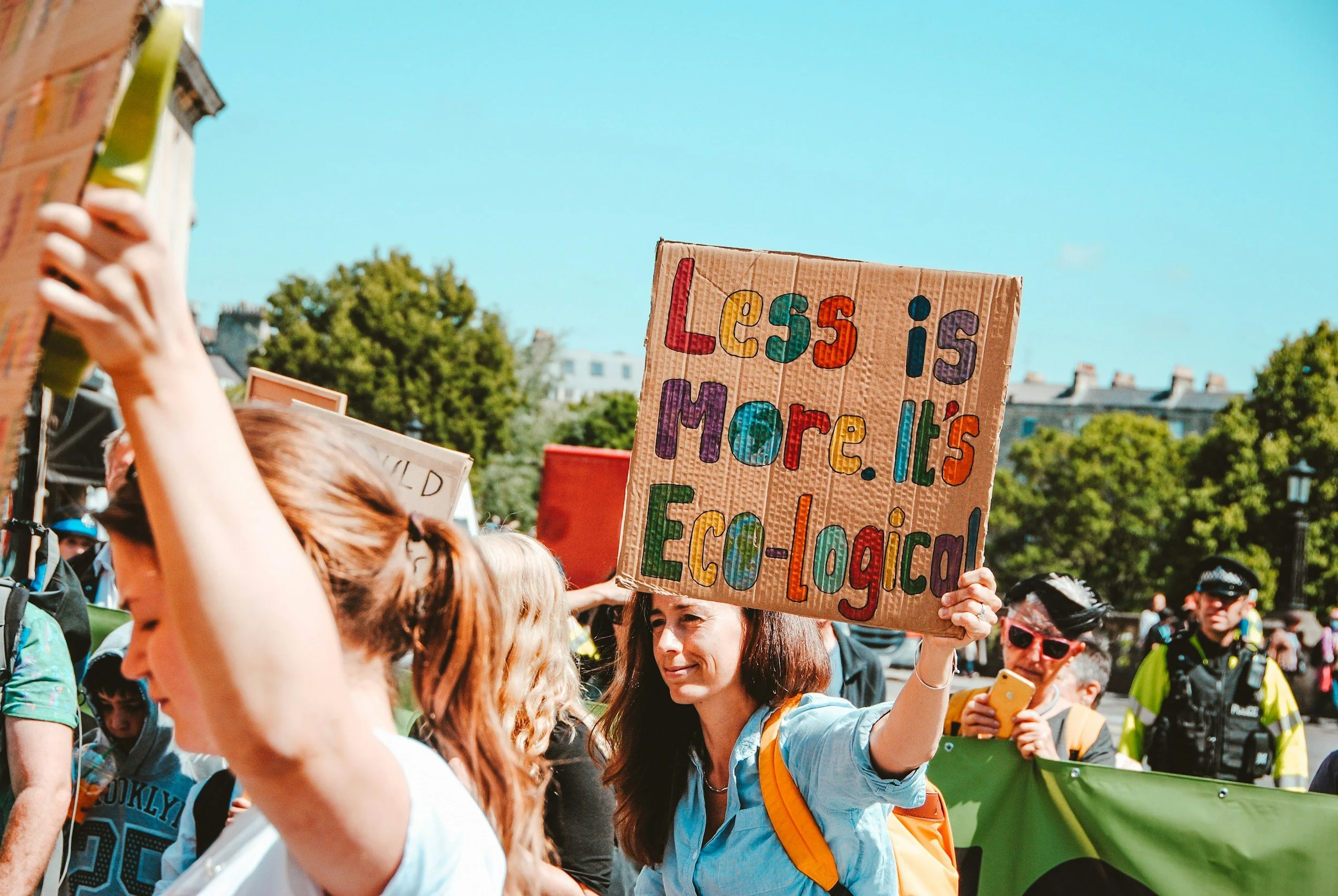
Climate change is real, overwhelming, and bigger than any one family can solve alone. That does not mean you are powerless, and it does not mean your nervous system has to live in constant alarm.
🎯 Reframe
Earth Day can bring up a strange mix of feelings.
Love for the natural world. Guilt about not doing enough. Fear about what is coming. Anger that so much is out of individual control. Exhaustion from trying to care in a world that keeps demanding more from ordinary people while many of the largest drivers of climate harm remain systemic and political.
That emotional mix is not irrational. Climate anxiety is not simply “being dramatic.” Research increasingly treats eco-anxiety and climate anxiety as understandable responses to a real threat, and reviews have found that climate-related distress is associated with broader psychological distress, anxiety, depression, and stress symptoms. At the same time, not all climate anxiety is pathological; some of it is an adaptive signal that something meaningful is at stake. (ScienceDirect)
This is part of why Al Gore’s An Inconvenient Truth landed so powerfully when it came out in 2006: the truth was inconvenient then, and it is still inconvenient now. Climate change asks us to feel something many systems would rather help us avoid—grief, responsibility, limits, and interdependence. (Encyclopedia Britannica)
And still, there is a steadier truth available too: nature does not teach a linear model of resilience. Nature teaches cycles. Seasons. Dormancy. Regrowth. Fire. Recovery. Loss that changes the landscape, but does not always end life.
That matters psychologically.
🧠 What the science shows
Climate change is a health issue, not only an environmental one. The World Health Organization notes that climate change affects core conditions for health, including air, water, food, shelter, and safety. (World Health Organization)
Psychologically, climate change can show up as worry, helplessness, grief, anger, dread, moral distress, or numbness. A 2024 systematic review found that eco-anxiety was positively associated with multiple mental health outcomes, including psychological distress, anxiety, depression, and stress symptoms. (PMC)
At the same time, the goal is not to pathologize every climate emotion. Susan Clayton’s work has emphasized that climate anxiety can be both distressing and adaptive. In other words: your worry may be painful, but it may also reflect awareness, conscience, and connection. (ScienceDirect)
Nature contact appears to help regulate mental health for many people. Reviews have found associations between nature exposure and improved mental health, cognitive function, blood pressure, and stress-related outcomes, and newer reviews continue to find mental health benefits from nature exposure and nature-based interventions. (PMC)
Breathing practices can help too, especially slower, more structured breathing rather than frantic “just take a breath” advice. Meta-analytic and systematic review evidence suggests breathwork and slow or controlled breathing can reduce stress and anxiety, though technique and consistency matter. (Europe PMC)
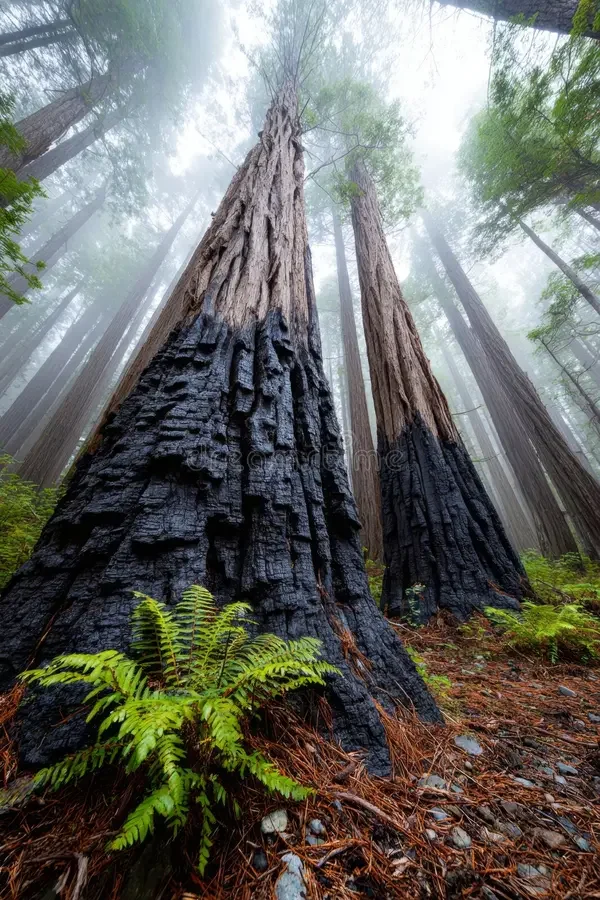
And then there is symbolism, which psychology should not underestimate. Mature coast redwoods are naturally resistant to fire because of their thick bark and other adaptive features, and they can resprout after fire damage. They are not invincible, and climate change still threatens redwood ecosystems. But they do offer a powerful metaphor: resilience is not untouched perfection. Sometimes resilience is surviving damage, then growing again from what remains. (National Park Service)
🧭 ACT lens
From an ACT perspective, climate anxiety makes sense.
The problem is not that you care too much. The problem is what often happens next: fusion, overwhelm, and collapse. Your mind says, This is enormous, therefore I must solve all of it, and when you cannot, it swings toward Then nothing I do matters.
That is a painful trap.
ACT offers a different stance: make room for the feeling, come back to the present moment, and choose values-based action at a human scale.
Not all action has to be massive to be real.
Not all care has to be optimized to count.
Not all hope has to feel bright to be sturdy.
There is also something deeply corrective about remembering that both breath and nature are older than productivity culture. Long before self-improvement branding turned regulation into content, human beings across cultures used slower breathing, ritual, land, water, shade, walking, and seasonal rhythms to settle the body and orient to life. We do not need to invent regulation from scratch. In many ways, we need to return to practices we already belong to.
Nature helps here because it is cyclical, not linear. A tree does not decide it has failed because winter came. A forest does not confuse dormancy with uselessness. A burned landscape may look ruined before it looks renewed. That does not make the damage unreal. It means recovery may not be immediate, pretty, or straight.
Neither is ours.

🔧 Skills you can use today
1. Narrow the frame.
When climate anxiety spikes, your mind may zoom out so far that everything feels impossible. Gently ask:
What is mine to feel right now?
What is mine to do this week?
What is not mine to control alone?
This is not denial. It is nervous system triage.
2. Use nature as regulation, not as a performance goal.
You do not need a perfect hike, a cabin, or a national park itinerary. Step outside for ten minutes. Look at one tree. Stand near moving air. Notice birds, clouds, dirt, water, or light shifting on a wall. Let your body register that you are part of a living world, not only a stream of headlines.
3. Try one slow-breathing practice.
A simple option: inhale for 4, exhale for 6, for 3 to 5 minutes. Longer exhales can support downshifting for many people. If counting stresses you out, try:
In… slowly.
Out… even slower.
Let the point be steadiness, not perfection. (PMC)
4. Trade solitary guilt for shared action.
Climate distress worsens when it becomes private shame. Join one concrete, collective thing: a native plant swap, a local clean-up, a school garden, a community compost effort, a town meeting, a repair event, or a mutual-aid project during heat waves. Small collective action often helps convert helplessness into agency. (ScienceDirect)
5. Reduce doomscrolling without reducing reality.
Staying informed is different from marinating in crisis content. Choose one or two trusted sources. Check them at defined times. Do not ask your nervous system to metabolize the whole planet before breakfast.
🧷 Untrendy but True
You were never meant to carry the whole planet in your nervous system by yourself.
Let nature remind you: resilience is often cyclical, not linear; collective, not solitary; rooted, not rushed.
Resources for the Curious
📚 Books
Generation Dread: Finding Purpose in an Age of Climate Anxiety — Britt Wray. A psychologically informed, research-grounded book on climate distress, meaning, and action.
A Field Guide to Climate Anxiety: How to Keep Your Cool on a Warming Planet — Sarah Jaquette Ray. A practical, evidence-informed guide that addresses overwhelm, burnout, and climate emotions without minimizing the crisis.
How to Live in a Chaotic Climate — Good Grief Network. A community-oriented, emotionally honest resource built around coping with eco-anxiety, grief, and collective distress.
🎧 Podcasts
Speaking of Psychology: “How to cope with climate anxiety” — A clear, evidence-based episode from the APA that helps normalize climate distress and offers grounded coping ideas.
Good Grief Network Podcast: “A Field Guide to Climate (Coronavirus) Anxiety” — More conversational and human, with a focus on staying emotionally engaged without burning out.
Speaking of Psychology: “Why nature is good for your brain” — Helpful for clients who want the science behind why time outside can support mood, attention, and regulation.
▶️ Videos
References
Bentley, T. G. K., et al. (2023). Breathing practices for stress and anxiety reduction: Conceptual framework of implementation guidelines based on a systematic review of the published literature. Clinical Practice and Epidemiology in Mental Health, 19, e174501792306270.
Bhugra, D., et al. (2025). Climate change and its impact on mental health. BJPsych International.
Clayton, S. (2020). Climate anxiety: Psychological responses to climate change. Journal of Anxiety Disorders, 74, 102263.
Cosh, S. M., et al. (2024). The relationship between climate change and mental health: A systematic review. The Journal of Climate Change and Health, 17, 100317.
Fincham, G. W., et al. (2023). Effect of breathwork on stress and mental health: A meta-analysis of randomised-controlled trials. Scientific Reports, 13, 432.
Jimenez, M. P., et al. (2021). Associations between nature exposure and health: A review of the evidence. International Journal of Environmental Research and Public Health, 18(9), 4790.
National Institute for Health and Care Excellence. (2024). Local green spaces are linked with better mental health.
National Institute of Mental Health. (n.d.). Autism spectrum disorder.
National Park Service. (2022, July 17). Fire & redwoods—What does the future hold for this ancient species?
National Park Service. (2025, May 15). Coast redwood.
World Health Organization. (2023, October 12). Climate change and health.