Grief in a Season of Cheer: Holidays, Year-End, and the Weight of Firsts
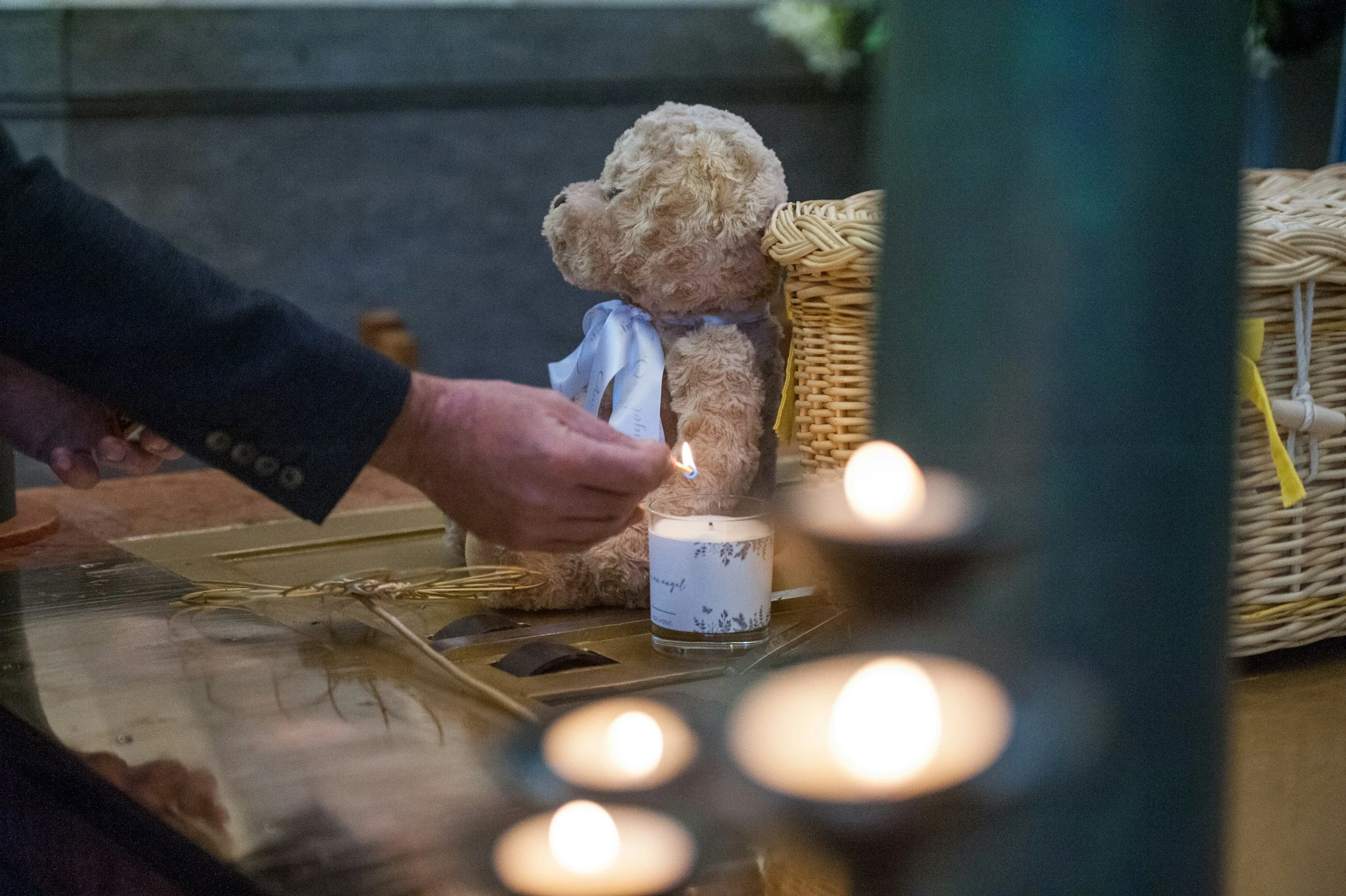
Space for all kinds of loss—across beliefs, identities, and timelines
🕯️ December 16, 2025
🌌 Many Faces of December Grief
December isn’t one story. Alongside music, lights, and gatherings, many of us carry losses that don’t fit neatly at a table setting: loss, divorce/breakups, estrangement, immigration-related losses (home, language, community), miscarriage and fertility losses, health changes, identity shifts, and ambiguous losses where the person or thing is gone-but-not-gone (Boss, 2006). Anniversaries, “first holidays after…,” and even “year five when it suddenly hits” are all real. If a voice says “I shouldn’t be this sad—it was a long time ago”, that’s a common (and unhelpful) cultural script, not a clinical truth (Bonanno, 2004; Klass, Silverman, & Nickman, 1996).
🗓️ Grief Timelines Aren’t Linear (or Calendar-Compliant)
Tearfulness in year seven can be as valid as in year one. Many people oscillate—some days oriented to the loss, other days to restoration (new roles, tasks, even moments of joy). That back-and-forth is a healthy, adaptive pattern described by the Dual Process Model (Stroebe & Schut, 1999). Cultural pressures—“be strong,” “move on”—often collide with lived experience. You’re not failing grief; you’re being human.
🧭 ACT Lens: Making Room Without Forcing “Over It”
Acceptance and Commitment Therapy (ACT) invites two gentle moves:
Willingness (instead of white-knuckling): allowing grief to be present—sensations, memories, pangs—while you choose small, caring actions that matter to you (Hayes, Strosahl, & Wilson, 2012).
Self-as-context (simple version): There’s a part of you that can notice this pain and still choose. You are the sky; grief is weather. Both can coexist.
Try a 30-second practice:
“I’m noticing heaviness in my chest. I can place a hand there, exhale slowly, and choose one small meaningful step—text a friend, step outside, light a candle.”

🕯️ Flexible Rituals for Many Identities and Beliefs
Pick what fits your tradition—or no tradition at all. Adapt for solo, family, diaspora, or virtual spaces.
Light: Candle, tea light, lantern, or incense; one breath of remembrance.
Taste: Cook their favorite dish—or order it. Save a small portion; share a memory.
Sound: Shared playlist; one song during prep or cleanup.
Words: Write a letter; speak a one-line toast; place a note under a plate.
Nature: Pocket a smooth stone, take a short walk, plant a bulb, release biodegradable notes into water.
Virtual: Five-minute video toast across time zones; group text of one photo or memory.
Permission to opt out: It is kind to skip rituals if that’s what helps this year (Bonanno, 2004).
Research supports continuing bonds—an ongoing, evolving connection rather than “letting go”—as a healthy path for many mourners (Klass et al., 1996).
🧶 Saying “No” and “I Miss You” in the Same Month
Boundaries can love people on purpose. Use ACT’s values-first tone: brief, kind, specific.
Declining events
“I’m keeping things small this year and won’t make the party. I’m free for a short walk Saturday.”
“I won’t be at the usual dinner. I’ll drop off dessert and send a toast.”
Redirecting invalidating talk
“I know you want to help. ‘Moving on’ doesn’t fit for me—could we skip advice tonight?”
“I’m not up for stories right now. Let’s talk about your trip!”
Asking for what you need
“Could we talk about them for 10 minutes?” (set a timer, then pivot)
“Can we not mention them this year? I’ll let you know when I’m ready.”
Both/And closing
You’re allowed to cry and laugh, to keep a quiet day and notice a moment of relief. Both are valid, both are part of adaptation (Stroebe & Schut, 1999; Bonanno, 2004).
🧷 Untrendy but True
Grief isn’t a test to pass—it’s a relationship to carry.
Choose one tiny, values-aligned action today. Let that be enough.
Resources for the Curious
📚 Books
It’s OK That You’re Not OK — Megan Devine
Compassionate, no-fixing framework; great for “both/and” holidays.Ambiguous Loss — Pauline Boss
When the person/thing is gone-but-not-gone (immigration, illness, estrangement).
🎧 Podcasts
Griefcast — Conversations that normalize tears and laughter.
Terrible, Thanks for Asking — Real stories that hold complexity.
Everything Happens with Kate Bowler — Faith-curious talks on limits and love.
🧰 Toolkits & Guides
What’s Your Grief — Holiday survival lists, rituals, and photo/memory ideas.
Modern Loss — Real-life stories + “how-to” articles for tough days.
Dougy Center — Grief resources for kids/teens and the adults who love them.
Refuge in Grief (Megan Devine) — Scripts, validation, and “how to help a friend.”
☎️ 24/7 Support & Communities
988 Suicide & Crisis Lifeline — Call or text 988 (U.S.) for immediate, confidential support.
The Trevor Project — 24/7 crisis services for LGBTQ+ youth: call/text/chat.
NAMI HelpLine — Education, support groups, and local resources.
National Queer & Trans Therapists of Color Network (NQTTCN) — Healing justice resources + therapist directory.
BEAM (Black Emotional and Mental Health Collective) — Community-based care and education.
🧠 References
Bonanno, G. A. (2004). Loss, trauma, and human resilience: Have we underestimated the human capacity to thrive after extremely aversive events? American Psychologist, 59(1), 20–28.
Boss, P. (2006). Loss, trauma, and resilience: Therapeutic work with ambiguous loss. W. W. Norton.
Hayes, S. C., Strosahl, K. D., & Wilson, K. G. (2012). Acceptance and commitment therapy: The process and practice of mindful change (2nd ed.). Guilford Press.
Klass, D., Silverman, P. R., & Nickman, S. (Eds.). (1996). Continuing bonds: New understandings of grief. Taylor & Francis.
Stroebe, M., & Schut, H. (1999). The dual process model of coping with bereavement: Rationale and description. Death Studies, 23(3), 197–224.