Kindness as a Survival Skill (Not a Personality Trait)
Why compassion is forged in danger—not comfort

February 24, 2026
Kindness is often talked about as if it’s a personality trait.
Something you’re either born with or not.
Something gentle, soft, agreeable.
Clinically—and lived—it’s rarely that simple.
For many people, kindness is not learned in safety.
It’s learned in threat.
“I learned how to read a room before I learned how to rest.”
“Being kind kept me alive.”
For queer folks, women, and many BIPOC individuals, kindness often develops early—not as sweetness, but as skill. A way to stay connected, reduce harm, de-escalate danger, or preserve dignity in systems that were not built with your safety in mind.
That kind of kindness is not naïve.
It’s adaptive.
And it’s often misunderstood.
🕯️ Compassion With Teeth
In A Queer and Pleasant Danger, Kate Bornstein writes about compassion not as moral purity, but as something earned—forged in the midst of real harm, real systems, real consequences.
Her compassion toward people who upheld oppressive structures—including people who harmed her—is not about excusing behavior. It’s not about minimizing danger. It’s not about being “nice.”
It’s gritty compassion:
clear-eyed
boundary-aware
self-protective
grounded in survival, not denial
This is compassion that understands harm without internalizing it.
✨An ACT Lens: Self-Compassion Is Willingness, Not Indulgence
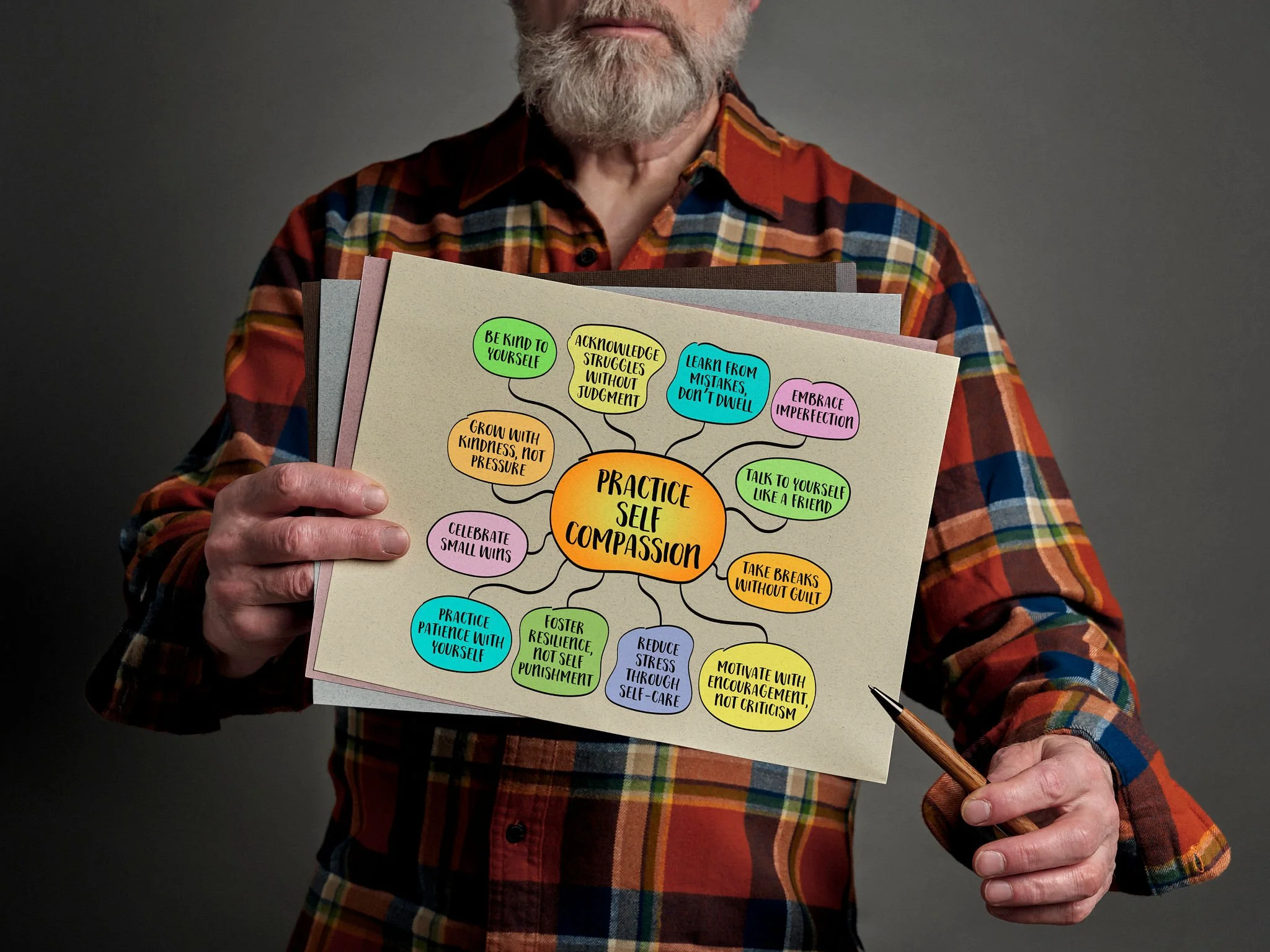
In Acceptance and Commitment Therapy (ACT), compassion—especially self-compassion—is not about self-soothing at all costs. It is about willingness.
Willingness to:
feel pain without turning it inward
notice suffering without fusing with shame
respond to threat without abandoning values
Self-compassion in ACT is not “letting yourself off the hook.”
It is refusing to become your own executioner.
Research shows that self-compassion supports resilience, emotional regulation, and psychological flexibility—particularly under stress (Neff & Germer, 2013). It allows people to acknowledge pain without adding a second layer of self-attack.
“I stopped asking what was wrong with me and started asking what I was surviving.”
🫶 Compassion Under Threat Is a Values-Based Action
When danger is present—emotional, relational, systemic—compassion becomes a choice guided by values, not feelings.
ACT distinguishes between:
values-based action (chosen, intentional, flexible)
rule-governed compliance (“I must be kind or else”)
This distinction matters deeply for people who have been socialized to overextend.
For many clients, especially queer folks, women, and BIPOC individuals, “being kind” was rewarded when it meant:
staying quiet
smoothing things over
absorbing harm
prioritizing others’ comfort over their own safety
That is not compassion.
That is self-betrayal disguised as virtue.
True compassion includes:
boundaries
discernment
withdrawal when necessary
anger when appropriate
self-protection as an act of care
♥ Kindness Does Not Mean Compliance
This is where therapy often does corrective work.
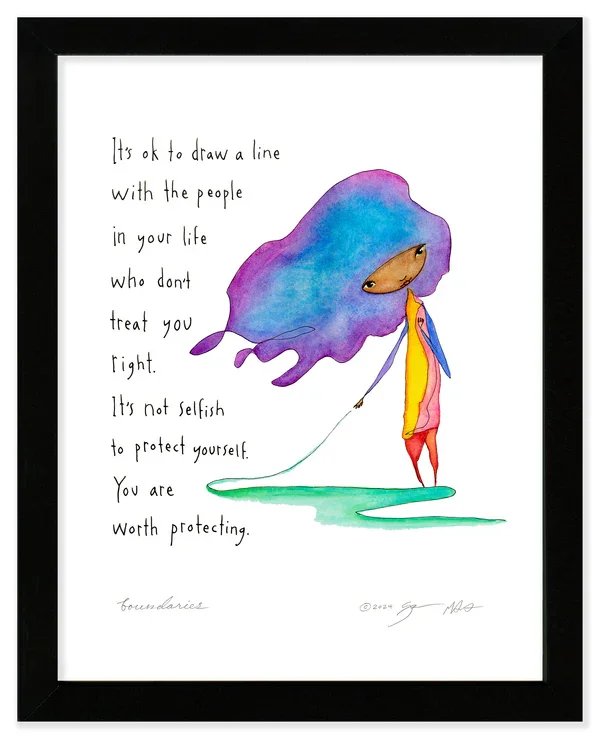
Compassion does not require:
staying in unsafe relationships
explaining yourself repeatedly
forgiving on someone else’s timeline
offering access to people who harm you
Kindness can look like distance.
It can look like silence.
It can look like choosing not to engage.
“I thought I was kind. I was actually scared.”
Learning the difference is not a failure of character—it’s a developmental repair.
✦ Untrendy but True ✦
Compassion isn’t soft.
It’s not performative.
It’s not endless.
And it’s not owed to everyone.
Real kindness is protective.
It preserves your humanity and your safety.
It allows you to make room for pain without becoming the pain.
For many people, kindness wasn’t a luxury.
It was a survival skill.
And learning when to use it—and when not to—is part of healing.
🌱 For the Curious
Books
Hayes, S. C. (2019). A Liberated Mind
Neff, K. (2011). Self-Compassion
Bornstein, K. (2012). A Queer and Pleasant Danger
Podcasts
Psychologists Off the Clock — Compassion & boundaries
Where Should We Begin? — Power, repair, and self-respect
The Trauma Therapist Podcast — Compassion without self-erasure
Videos
References
Hayes, S. C., Strosahl, K. D., & Wilson, K. G. (2012). Acceptance and commitment therapy: The process and practice of mindful change (2nd ed.). Guilford Press.
Neff, K. D., & Germer, C. K. (2013). A pilot study and randomized controlled trial of the mindful self‐compassion program. Journal of Clinical Psychology, 69(1), 28–44.
Bornstein, K. (2012). A queer and pleasant danger. Beacon Press.