What Social Media Actually Does to Your Mental Health
Not what the influencers say — what the research says

May 13, 2026
By now, most of us have a vague sense that social media isn't great for us. We feel it in the anxiety after scrolling, the comparison spiral after looking at someone's highlight reel, the way thirty minutes somehow becomes two hours. We know something is off.
But knowing something feels bad and understanding what it's actually doing — and to whom — are different things. The research is more specific, more alarming in some places, and more nuanced in others than the headlines suggest. As a psychologist, I want to give you the real picture.
“We are living through a great rewiring of childhood.”
📊 What the research actually shows
The evidence is substantial and growing. Multiple large-scale studies link heavy social media use to increased rates of depression, anxiety, sleep disruption, and body image distress — particularly in adolescents and young adults (Burgess, 2025; Haidt, 2024). The U.S. Surgeon General issued an advisory in 2023 stating plainly that we cannot conclude social media is sufficiently safe for children and adolescents.
But here is what often gets flattened in the public conversation: it is not just about how much time someone spends online. It is about what they are doing and who they are when they do it.
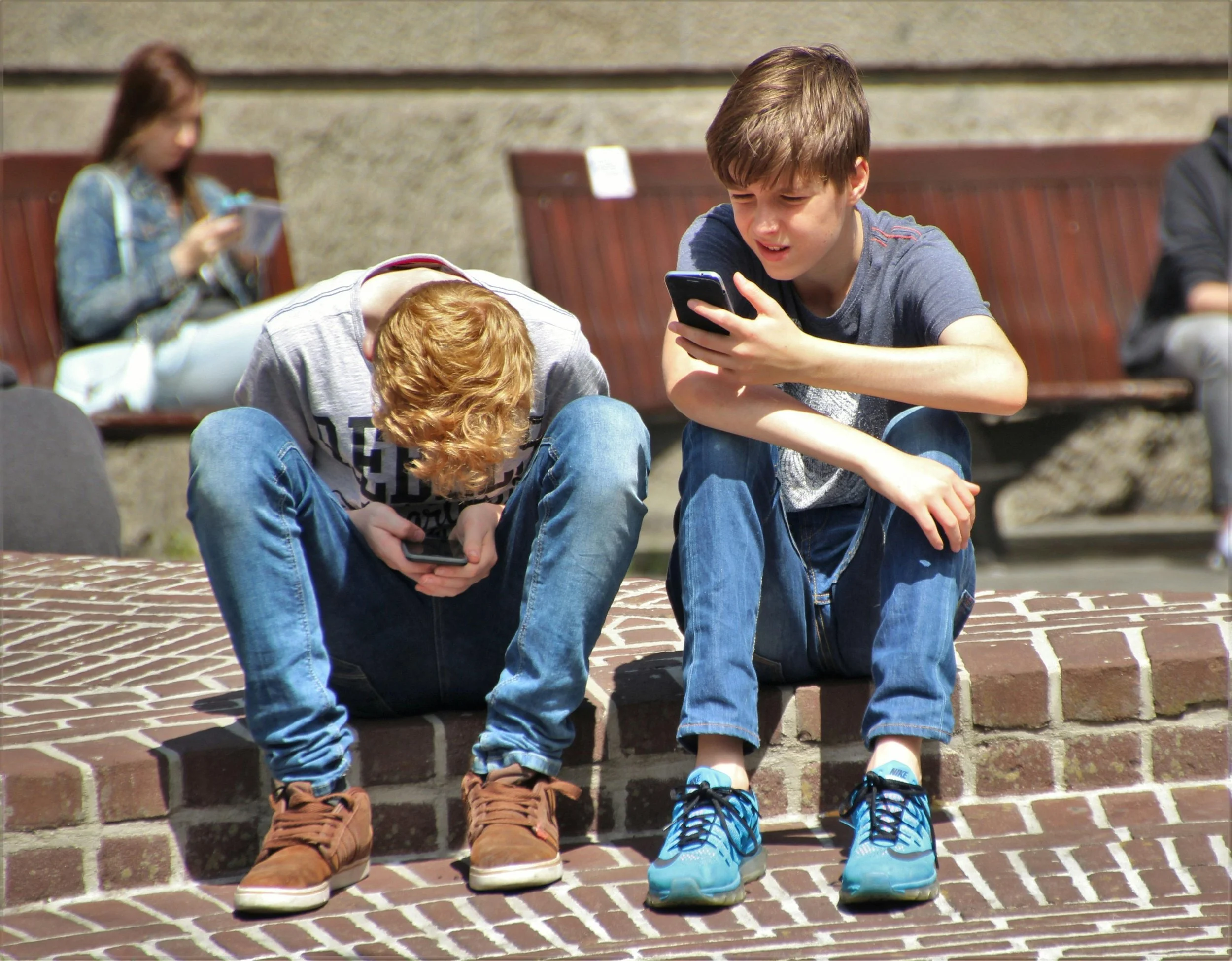
Research distinguishes between passive consumption — scrolling, comparing, absorbing — and active, connected engagement like direct messaging or community-building. Passive consumption is consistently associated with worse outcomes. Active, identity-affirming connection can actually support wellbeing, particularly for people who lack safety and belonging offline (Hopelab & Common Sense Media, 2024).
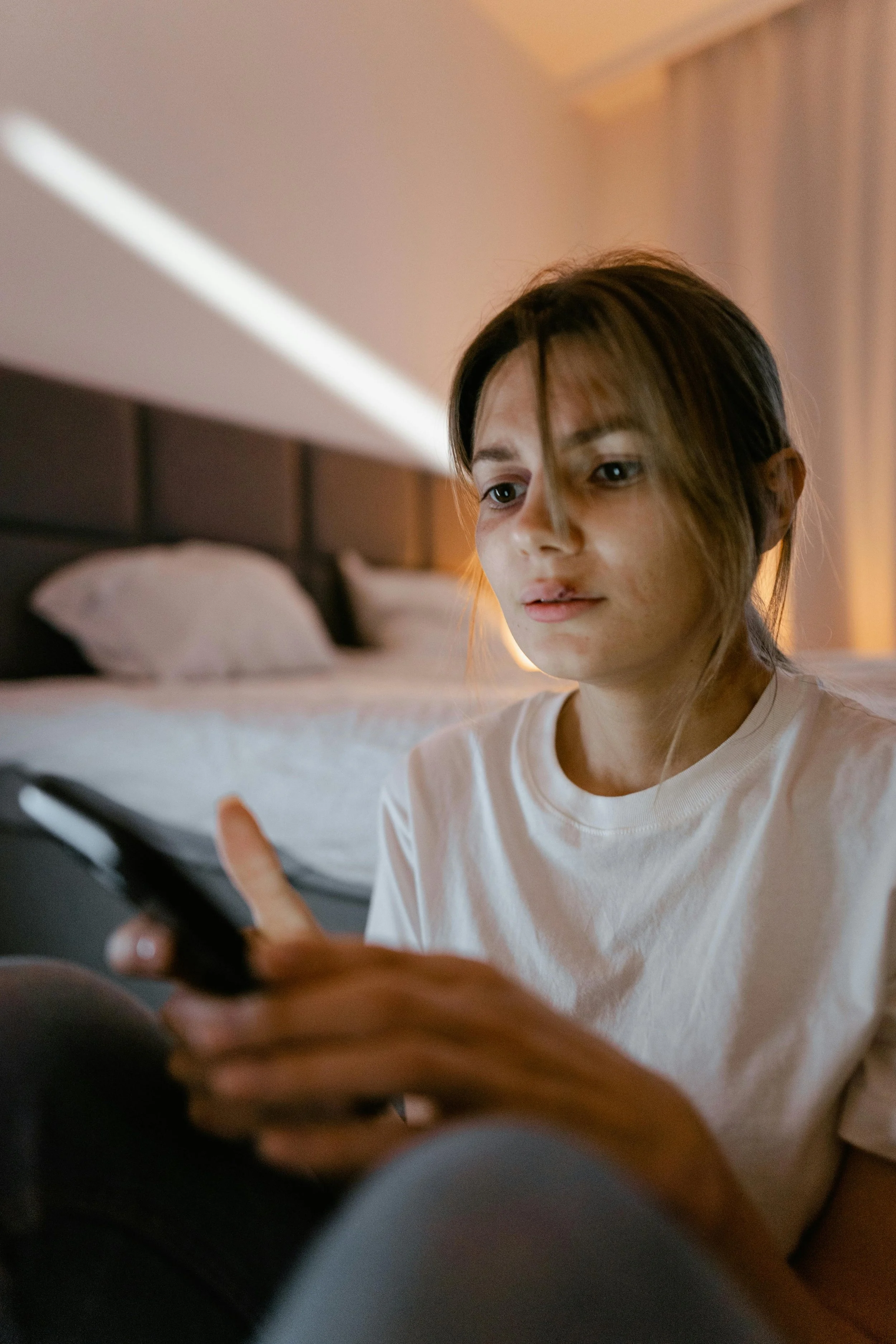
"I didn't realize how much I was using it to feel normal. But it was making me feel worse about myself every single time."
🧠 The mechanisms: what's actually happening in your brain
The harms are not random. There are specific psychological processes at work:
Social comparison — platforms are architecturally designed to invite comparison. You are not just seeing people's lives; you are seeing curated, filtered, optimized performances of their lives. Your nervous system doesn't automatically know the difference.
Attention fragmentation — the average social media platform is engineered to interrupt. Every notification, every scroll, every autoplay trains your brain to expect stimulation at shorter and shorter intervals. That rewiring doesn't stay online.
Approval anxiety — likes, comments, and follower counts create feedback loops that can tie self-worth to external validation in ways that are genuinely destabilizing, especially during identity formation in adolescence (Yang et al., 2025).
Sleep disruption — screens at night suppress melatonin and keep the nervous system activated. For heavy users, this alone accounts for significant mental health downstream effects (Haidt, 2024).
🌍 Who bears the most harm — and who gets left out of the conversation
The harms are not distributed equally, and any honest conversation about social media and mental health has to name that.
Girls and young women face disproportionate harm, particularly around body image, social comparison, and appearance-based feedback. LGBTQ+ youth experience both elevated risk and — critically — something the mainstream conversation often misses: social media can also be a lifeline. For queer young people in unsupportive homes or communities, online spaces may provide the only access to affirming community, identity information, and peer connection (Hopelab & Common Sense Media, 2024).
BIPOC youth face higher rates of online harassment and discrimination that compound existing mental health disparities (Craig et al., 2021). The algorithm does not protect them. In many cases it amplifies harm.
This both/and reality matters clinically. Blanket "just put the phone down" advice misses the young person for whom putting the phone down means putting down the only place they feel seen.
🔧 An ACT lens: defusing from the curated self
In Acceptance and Commitment Therapy, we talk about cognitive fusion — when you become so entangled with a thought or image that you treat it as reality. Social media is a fusion machine. You scroll, you fuse, you forget that what you are seeing is not the truth of anyone's life.
Defusion doesn't mean logging off forever. It means creating enough psychological distance to notice: I am watching a performance. This is not data about my worth.
Try this: The next time you catch yourself in a comparison spiral, pause and name what you are actually observing. "I am noticing a thought that my life is less than theirs." Then ask: "Is engaging with this thought moving me toward or away from who I want to be?"
You don't have to delete the app. You have to change your relationship to what you see.
✦ Untrendy but True ✦
Social media is not going away. Your neighbors are on it. Your kids are on it. You are on it. The goal is not purity — it is literacy.
Knowing what it does to your brain, your nervous system, and your sense of self is not a reason to panic. It is a reason to use it like something that requires intention rather than something that just happens to you.
🌱 For the Curious
📚 Books
The Anxious Generation — Jonathan Haidt — the most comprehensive account of how the smartphone-based childhood is reshaping adolescent mental health; essential for parents, clinicians, and anyone who works with young people
Stolen Focus — Johann Hari — a deeply reported look at what technology is doing to our capacity for attention and what we lose when we can no longer concentrate
Reclaiming Conversation — Sherry Turkle — a MIT researcher on what we sacrifice in human connection when screens fill every quiet moment
🎧 Podcasts
TED Radio Hour — "How 'Anxious Generation' Author Jonathan Haidt Took on Big Tech" — accessible, balanced, and includes youth voices pushing back on oversimplification
Your Undivided Attention — Tristan Harris and Aza Raskin from the Center for Humane Technology on the design choices behind addictive platforms
Maintenance Phase — their episode on diet culture and social media does the cultural analysis your nervous system deserves
📹 Videos
"Screens, Stress, and Struggling Kids" — Jonathan Haidt, TEDMED Conversation (2026) — clear, research-grounded, and covers both the harms and the path forward
"The Social Dilemma" (Netflix, 2020) — not a short clip, but worth a watch; former tech insiders explain the architecture of harm from the inside
References
Burgess, K. (2025). The decline in adolescents' mental health with the rise of social media: A narrative review. Journal of School Health, 95(3), 112–124. https://doi.org/10.1177/10401237251344098
Craig, S. L., Eaton, A. D., McInroy, L. B., Leung, V. W. Y., & Krishnan, S. (2021). Can social media participation enhance LGBTQ+ youth wellbeing? Development of the Social Media Benefits Scale. Social Media + Society, 7(1). https://doi.org/10.1177/2056305121988931
Haidt, J. (2024). The anxious generation: How the great rewiring of childhood is causing an epidemic of mental illness. Penguin Press.
Hopelab & Common Sense Media. (2024). A double-edged sword: How diverse communities of young people think about the multifaceted relationship between social media and mental health. https://hopelab.org/stories/2024-national-survey
U.S. Department of Health and Human Services. (2023). Social media and youth mental health: The U.S. Surgeon General's advisory. https://www.hhs.gov/surgeongeneral/reports-and-publications/youth-mental-health/social-media/index.html
Yang, C., Hunhoff, P., Lee, Y., & Abrell, J. (2025). Social media activities with different content characteristics and adolescent mental health: Cross-sectional survey study. Journal of Medical Internet Research, 27, e73098. https://doi.org/10.2196/73098