Memory as a Moral Skill: Holocaust Remembrance in an Age of Misinformation
January 27, 2026
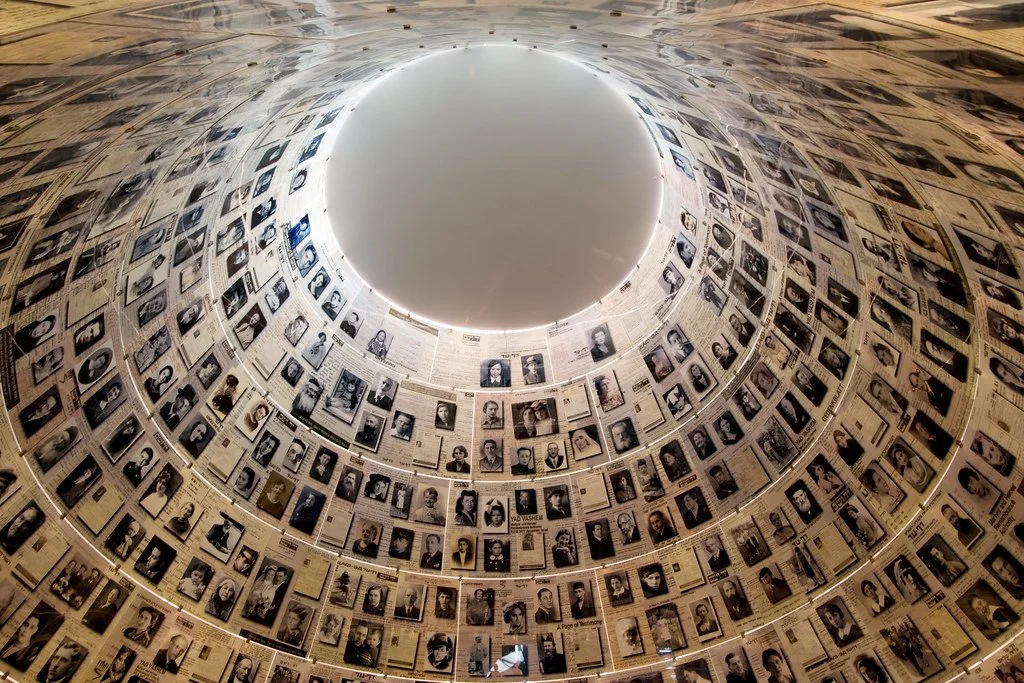
We remember to protect the living—and to stay human with one another.
🕯️Why today matters
January 27 is International Holocaust Remembrance Day—the anniversary of the liberation of Auschwitz-Birkenau—set by the United Nations to honor the six million Jews and millions of other victims of Nazi persecution and to recommit to “Never Again.”
Brief historical overview (1933–1945)
The Holocaust was the systematic, state-sponsored persecution and murder of six million Jews by Nazi Germany and its collaborators between 1933 and 1945. After the Nazi rise to power (1933), antisemitic laws stripped Jews of rights (e.g., the Nuremberg Laws, 1935). Violence escalated during Kristallnacht (1938), and with Germany’s invasion of Poland (1939) Jews were confined to ghettos and forced labor.
Following the 1941 invasion of the Soviet Union, mobile killing units (Einsatzgruppen) carried out mass shootings, while the regime implemented the “Final Solution” (1941–1942): industrialized murder in killing centers such as Auschwitz-Birkenau, Treblinka, Belzec, Sobibor, Chelmno, and Majdanek. Millions of others were persecuted and murdered, including Roma and Sinti, people with disabilities, Polish civilians, Soviet POWs, LGBTQ people, Jehovah’s Witnesses, and political dissidents.
Allied forces liberated the camps in 1944–1945; postwar, the Nuremberg Trials documented these crimes and established precedents in international law.
The cost of forgetting (and distortion)
Antisemitism has surged in recent years, alongside online denial and distortion of the Holocaust. When we lose connection to history and to people outside our immediate circles, we become more vulnerable to propaganda—and to repeating what we once thought unthinkable. Survivor testimony continues to stress this urgency.
How dehumanization works (and why connection is the antidote)
Dehumanization denies others’ humanness, making cruelty feel easier and concern feel optional. Misinformation amplifies this by collapsing nuance into us vs. them. Education that preserves historical accuracy—and relationships that cross difference—counteracts that pull.
🧭 A values-based stance (what to do, not just what to avoid)
Remember accurately. Read primary sources; name perpetrators and victims clearly; resist flattening.
Refuse dehumanizing language—about anyone. Hatred of one group corrodes our own humanity.
Widen your circle. Learn with and from people beyond your community.
Verify before you share. Slow down “viral” stories; cross-check sources.
Stand up—locally. Support safety at schools and community centers; report incidents; fund education and survivor archives.
🗺️ Try this week (pick one tiny step)
90-second pause before posting: “Have I verified this? Who is humanized—or erased—by this message?”
Listen across difference: Ask a Jewish neighbor, friend, or family member how they’re doing this week; listen, don’t debate.
Read one primary source: A page of survivor testimony from a recognized archive.
Name and report: If you witness harassment, vandalism, or threats, document and report it through local and national channels.
Teach one concrete fact at your table or team meeting
🧷 Untrendy but True
Remembering is not an academic exercise. It is a practice of belonging—to history, to each other, and to our own conscience.
Resources for the Curious
📚 Books & archives
United States Holocaust Memorial Museum (USHMM) — survivor testimonies, timelines, teaching materials.
UNESCO resources on teaching about the Holocaust and genocide — pedagogy for countering denial/distortion.
Haslam, N. (2006). Dehumanization: An integrative review. Personality and Social Psychology Review, 10(3), 252–264.
🎧 Podcasts & talks
Auschwitz-Birkenau Memorial recordings — survivor voices and historical context.
UNESCO/partner webinars on countering Holocaust distortion — practical strategies for schools and communities.
References
Haslam, N. (2006). Dehumanization: An integrative review. Personality and Social Psychology Review, 10(3), 252–264.
Wineburg, S., & McGrew, S. (2019). Lateral reading and the nature of expertise: Reading less and learning more when evaluating digital information. Teachers College Record, 121(11), 1–40.
Wardle, C., & Derakhshan, H. (2017). Information disorder: Toward an interdisciplinary framework. Council of Europe.
Pennycook, G., & Rand, D. G. (2019). Fighting misinformation on social media using attention prompts. PNAS, 116(16), 2521–2526.