I Am Woman: What Claiming Space Looks Like on the Ground
“Beloved community is formed not by the eradication of difference but by its affirmation, by each of us claiming the identities and cultural legacies that shape who we are and how we live in the world.”
Reclamation is not a feeling—it's a practice.
🎯 What Claiming Space Actually Requires
You've been taught to make yourself smaller. Not always in words—usually in the microshift of your voice when someone powerful enters the room, the apology before you take up a chair, the way you shrink your needs to fit someone else's comfort. Bell Hooks called this the socialization of erasure: the systematic teaching that your existence, your voice, your body, your wants should be negotiated downward. "I am woman" is not a slogan. It's a refusal. And the work of claiming it is political, not just personal.
🧠 What the Science Shows
When we chronically make ourselves smaller—managing our voices, editing our thoughts, monitoring our bodies—we're engaging a survival strategy. The nervous system learns: visibility = danger. Take up less space = stay safe. This isn't a character flaw; it's an adaptive response to systems that punished you for being fully yourself. Research on perfectionism and people-pleasing shows these are rooted in early messages that your needs don't matter and your presence is too much. The cost is chronic stress, dissociation, and disconnection from your own desires. But neuroscience also shows that when people practice embodied presence—intentionally claiming space, speaking, taking up room—the nervous system recalibrates. It learns: I am safe to be here.
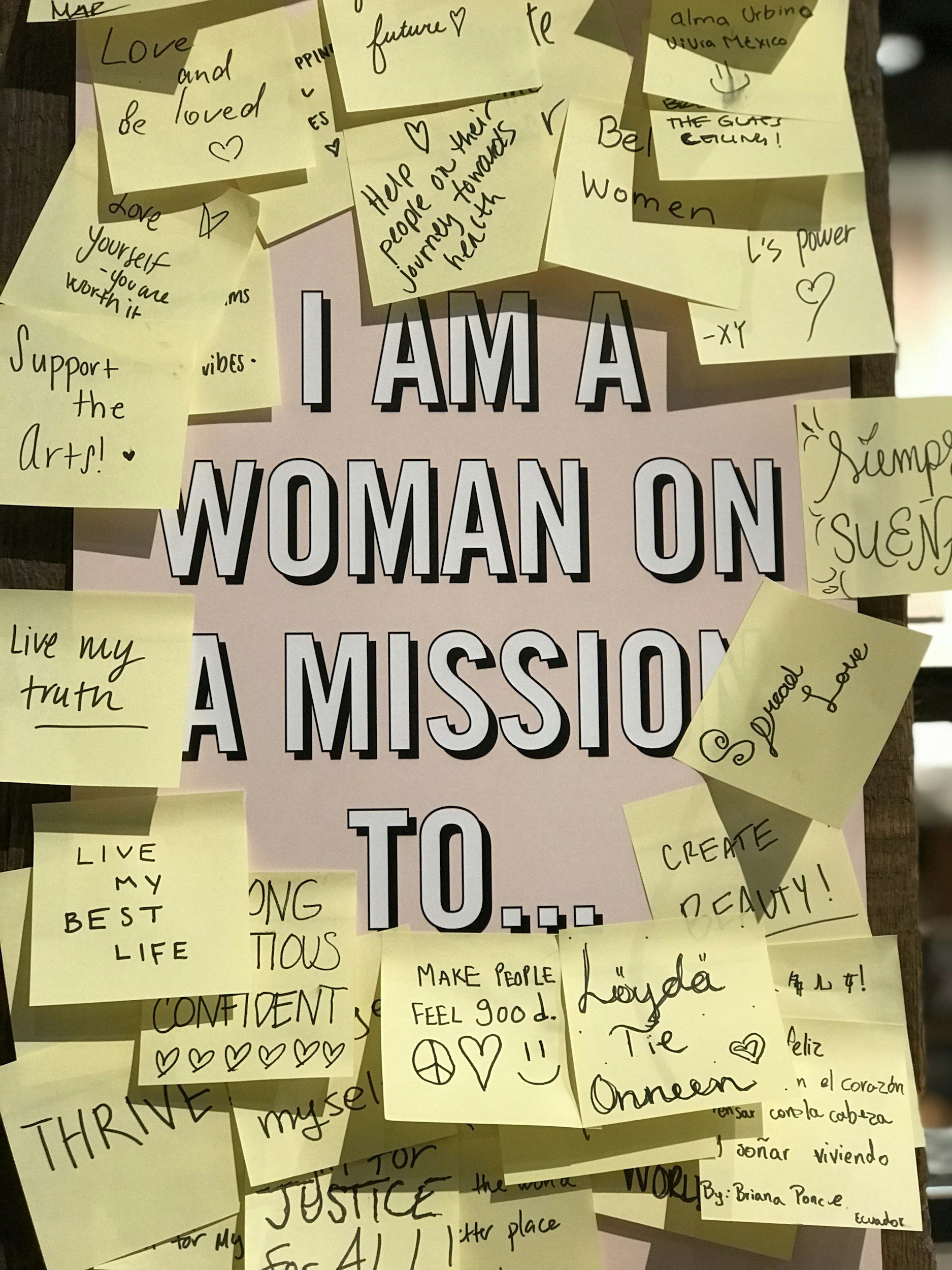
🧭 The ACT Lens: Who Do You Want to Be?
ACT asks: not "How do I feel good?" but "Who do I want to become?" Hooks grounded her entire framework here. She wasn't asking women to feel confident first, then claim space. She was asking them to identify their values and act aligned with them anyway—even when uncomfortable, even when people resist, even when the internalized voice says "be smaller."
Values: What identity do you want to claim? What parts of yourself have been negotiated away? What would wholeness look like?
Acceptance: The discomfort is real. Your nervous system will create resistance. You might feel guilt, fear, "selfishness." That's not a sign to stop. That's the edge where change happens.
Behavioral Activation: The work happens in tiny moments. Speaking up. Saying no without apologizing. Using your full voice. Asking for what you need. Acting like a woman who belongs until your nervous system believes it.
🔧 Skills You Can Use Today
1. Notice the moment you shrink. Where does it happen? With a specific person? In groups? When you feel perceived? The contraction—shallow breath, smaller voice, curled body—is your signal.
2. Ground your body before you speak. Feel your feet. Feel your weight in the chair. This tiny act rewires the nervous system. You are not floating. You belong here.
3. Speak your full sentence. Don't apologize before you speak. Don't soften with "I might be wrong, but..." Say what you mean. The discomfort is not a sign to edit—it's the edge of growth.
4. Reframe "selfish" as self-preservation. Taking up space, having needs, claiming your identity is not selfish. It's the refusal to disappear. That's survival.
5. Practice small refusals. Say no to something. Use your full voice in a low-stakes conversation. Take up the whole chair. Each small act recalibrates what feels safe.
🧷 Untrendy but True
You don't need permission to take up space. You don't need to earn it. You don't need to apologize for your voice, your body, your complexity. The work is claiming it anyway—choice by choice, moment by moment, until the practice becomes who you are.
Resources for the Curious
📚 Books
Ain't I a Woman: Black Women and Feminism — Bell Hooks (1981). The foundational text naming the intersection of racism, sexism, and erasure. Still radical.
The Body Keeps the Score — Bessel van der Kolk. How the nervous system holds survival patterns and how embodied practice rewires them.
Attached — Amir Levine & Rachel Heller. How early patterns of diminishment shape how we take up space in relationships.
🎧 Podcasts
On Purpose with Jay Shetty — Episodes on identity, authenticity, and claiming your voice with practical tools.
The Ezra Klein Show — Deep conversations on identity, feminism, and social theory that honor complexity.
Unlocking Us with Brené Brown — On vulnerability, shame resilience, and the courage to show up whole.
▶️ Videos
Bell Hooks on loving resistance and transforming ourselves (YouTube) — https://www.youtube.com/watch?v=iH3iX6C6PZ0 — Rare video of Hooks speaking on identity and transformation. Listen to her voice.
Sojourner Truth's "Ain't I a Woman?" (1851) — Multiple versions available on YouTube. The original speech that inspired Hooks. Brief and powerful.
How to Set Boundaries Without Feeling Guilty (The School of Life) — 6 minutes on the guilt women carry when claiming space.
References
Hooks, B. (1981). Ain't I a woman: Black women and feminism. Pluto Press.
Levine, A., & Heller, R. S. (2010). Attached: The new science of adult attachment and how it can help you find and keep love. Tarcher/Penguin.
van der Kolk, B. A. (2014). The body keeps the score: Brain, mind, and body in the healing of trauma. Viking.