Your Vacation Is Stressing You Out. That's Normal.
On why travel feels hard before it feels good — and what to do about the gap.
Nobody puts the meltdown in the travel reel.
They post the sunset and the table full of food and the matching linen outfits on the beach. They do not post the forty-minute fight about which suitcase to bring, or the child who screamed through the flight, or the Airbnb that looked nothing like the photos, or the Sunday afternoon when everyone was exhausted and overstimulated and someone finally said, "I thought this was supposed to be fun."
Summer travel stress is real. It doesn't mean you are doing vacation wrong. It means you are a human being in an overpriced, overscheduled, sensory-rich environment — usually with other human beings you care about, which makes everything more emotionally charged, not less.
Let's talk about what is actually happening, and what might actually help.
🧠 What the Brain Does in Transit
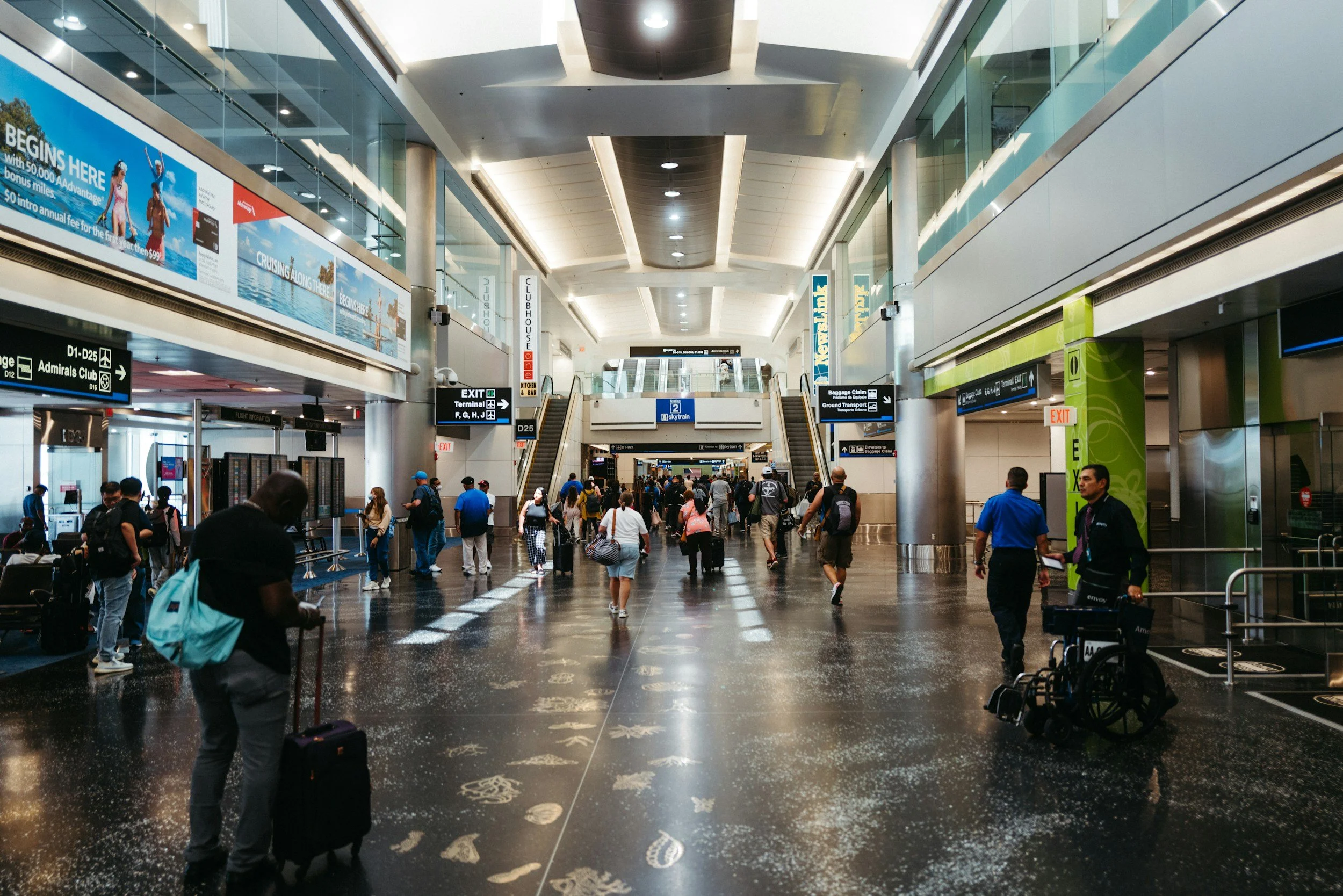
Travel is a significant neurological event. Leaving your routines — the temporal anchors that regulate sleep, eating, and sensory input — disrupts the body's circadian system and activates mild stress responses even in positive circumstances (Vosko et al., 2010). Add time zone changes, unfamiliar food, different levels of physical exertion, and the specific cortisol load of airports, and you have a body working harder than it looks like it's working.
For people managing anxiety, sensory sensitivities, ADHD, trauma histories, or mood disorders, this load can be substantially higher. A packed airport is not a neutral environment. Neither is sharing a small hotel room with children who will not sleep or a partner whose travel style turns out to be completely different from yours.
There is also what researchers call "anticipatory stress" — the psychological weight of planning, coordinating, and worrying before the trip even starts (Starcevic, 2012). Many people arrive at their destination already depleted.
“It’s not our experiences that form us but the ways in which we respond to them.”
🌍 Who Travel Is Hardest For
Travel stress is not evenly distributed. For some travelers, the stressors are compounded by factors that have nothing to do with packing:
Travelers of color navigating predominantly white spaces, or traveling in countries or regions where discrimination or surveillance is a real concern. The psychological labor of threat assessment does not pause on vacation.
LGBTQ+ travelers, especially those traveling internationally, who must assess safety in destination countries where laws and norms may differ significantly from home.
Disabled travelers navigating infrastructure, transportation, and accommodations that were often not designed with their bodies or needs in mind.
Travelers with dietary restrictions — religious, medical, or otherwise — for whom the "just eat what's local" advice may be both impractical and invalidating.
Caregivers — parents, those caring for elderly relatives, or anyone whose job does not actually stop when they board the plane.
If travel feels harder for you than it seems to for other people, there may be a structural reason for that. And naming it is not complaining. It is accurate.

✈️ ACT on the Road
Acceptance and Commitment Therapy offers a useful frame for travel stress: the gap between what we hoped a trip would feel like and what it actually feels like is often where the most suffering lives. We fuse with the expectation — it should be relaxing, it should be connecting, it should be worth the money — and when reality doesn't match, we add a layer of disappointment on top of the original stress.
ACT would invite a different stance: let the trip be what it is. Notice what you're feeling without adding a verdict about what it means. A hard travel day doesn't mean the trip is ruined. A tearful moment at the airport doesn't mean you shouldn't have gone. Frustration with your travel companion doesn't mean the relationship is broken.
It means you are a person, in an imperfect situation, trying to show up for something that matters to you.
🔧 Practice: The Travel Reset
When the trip is starting to unravel, try a one-minute reset:
Name it (silently or aloud): "This is hard right now."
Drop anchor: feel your feet on the ground, your breath in your body.
Ask: What do I actually need in the next 30 minutes? Not the whole trip. Not the whole day. Just the next 30 minutes.
Name one thing that is still true and okay, even now.
You don't have to be grateful. You just have to be here.
🧷 Untrendy but True
The pressure to have a perfect vacation is a product being sold to you. Sunsets are real, and so are meltdowns. Connection is real, and so is overstimulation. Meaning is real, and so is the chaos that sometimes surrounds it.
The trip doesn't have to be Instagram-worthy to be worthwhile. It just has to be yours.
And you don't need to buy anything to get there.
Resources for the curious
📚 Books
The Art of Stillness: Adventures in Going Nowhere — Pico Iyer. A quiet, wise reflection on what travel is actually for — and what staying put can teach us.
Digital Minimalism: Choosing a Focused Life in a Noisy World — Cal Newport. Useful for anyone trying to actually be present during vacation rather than documenting it.
Rest: Why You Get More Done When You Work Less — Alex Soojung-Kim Pang. Evidence-based case for why rest is not laziness — and why we're terrible at it.
🎧 Podcasts
Death, Sex & Money — Covers travel, money stress, and family dynamics with unusual frankness.
Unlocking Us with Brené Brown — Several episodes address the gap between the life we perform and the life we actually live. Relevant for travel's social performance pressure.
▶️ Video
Rick Steves' travel philosophy video — Available on YouTube, accessible reflections on managing overwhelm and finding meaning on the road rather than optimizing every moment.
References
Gross, J. J. (2015). Emotion regulation: Current status and future prospects. Psychological Inquiry, 26(1), 1–26.
Starcevic, V. (2012). Is Internet addiction a useful concept? Australian & New Zealand Journal of Psychiatry, 47(1), 16–19.
Vosko, A. M., Colwell, C. S., & Avidan, A. Y. (2010). Jet lag syndrome: Circadian organization, pathophysiology, and management strategies. Nature and Science of Sleep, 2, 187–198.
Williams, D. R., & Wyatt, R. (2015). Racial bias in health care and health: Challenges and opportunities. JAMA, 314(6), 555–556.