Juneteenth Is Not Closure. It Is Continuation.
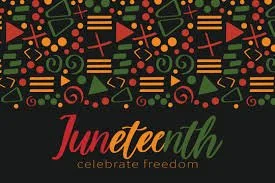
On joy, grief, and what it means to celebrate freedom that is still being earned.
June 16, 2026
There is a tradition in many Black communities of red foods and drinks on Juneteenth — red strawberry soda, red velvet cake, red punch, watermelon. The origins trace partly to West African cultural practices, to the symbolic power of red in the African diaspora, to hibiscus and sorghum and memory carried across centuries of forced migration.
Red is the color of blood. It is also the color of joy. Both belong on the table.
That both/and is what Juneteenth holds. It is a celebration — genuinely, meaningfully, joyfully. And it is a reckoning. And it is an ongoing story that did not end on June 19, 1865, and has not ended yet.
This year, I want to sit with all of it.

📜 What Actually Happened on June 19, 1865
Two and a half years. That is how long enslaved Black people in Texas waited to be told — officially — that they were free.
The Emancipation Proclamation had been signed on January 1, 1863. The Confederacy had surrendered in April 1865. And on June 19, 1865, Union soldiers arrived in Galveston, Texas, and General Gordon Granger read General Order No. 3: the enslaved people of Texas were free.
What is often left out of this story is that enslavers in Texas had been deliberately withholding this information. Some historians note that slaveholders delayed the announcement to extract more labor before the news could change anything. Freedom was real — and it was suppressed.
That delay is not a historical footnote. It is a template for understanding how liberation and obstruction have coexisted in American history ever since.
🔬 The Psychology of Delayed Liberation
From a psychological standpoint, what happened in Texas in 1865 is not only a legal or political story. It is a story about what happens to people when freedom is withheld, distorted, and eventually granted in incomplete forms.
Researchers who study historical trauma and intergenerational transmission of racial trauma have documented how the psychological impact of systemic oppression does not simply resolve when legal conditions change (DeGruy, 2005; Comas-Díaz et al., 2019). The wounds travel. The vigilance continues. The body keeps its own record.
ACT-informed practice also offers a frame here: avoidance of painful truths does not make those truths smaller — it makes them more powerful. The suppression of liberation news in Galveston, and the decades-long suppression of Juneteenth's significance in American public life, did not erase the experience. It deepened the wound of not being seen.
What Juneteenth does psychologically — when it is honored with fullness rather than flattened into a day off — is create space for what therapists might call integrated grief: holding both the loss and the love, the injustice and the joy, without requiring one to cancel the other (Hayes et al., 2006).

🎉 On Black Joy as a Psychological Act
Black joy is not naïve. It is not forgetting. It is not performed contentment.
Black joy is a form of radical presence — a refusal to be defined entirely by suffering, even when suffering is real and ongoing. Psychologically, the capacity to experience positive emotion alongside awareness of systemic harm is associated with resilience and post-traumatic growth (Mims & Waddell, 2019).
Juneteenth celebrations — the music, the red food, the family, the community, the prayer, the dance — are not separate from the work of liberation. They are part of it. Joy is evidence that freedom is not only a legal status but a living experience worth protecting.
For Black readers: you do not owe anyone a performance of resilience today. Your joy is yours. Your grief is yours. Your fatigue is yours. All of it is welcome.
For non-Black readers: if you are honoring Juneteenth this year, the best practice is not consumption but contribution. Learn the actual history. Support Black-owned businesses. Donate to organizations doing reparations and racial justice work. Show up to local commemorations as a witness. And resist the urge to center your own growth as the point.
“Nobody’s free until everybody’s free.”
🧷 Untrendy but True
Freedom is not an event. It is an ongoing practice — legal, cultural, psychological, and collective. Juneteenth reminds us that liberation was delayed by design, and that the work of honoring it is not ceremonial. It is continuous.
Joy and grief are not opposites. They are both part of what it means to be fully alive in a world that has not yet made good on its promises.
And you don't need to buy anything to get there.
Resources for the curious
📚 Books
Post Traumatic Slave Syndrome: America's Legacy of Enduring Injury and Healing — Joy DeGruy. A foundational text on intergenerational trauma, historical injury, and pathways toward healing.
The Sum of Us: What Racism Costs Everyone and How We Can Prosper Together — Heather McGhee. Connects the history of racial exclusion to present-day economic and social structures.
Heavy: An American Memoir — Kiese Laymon. A Black Southern writer's deeply personal reckoning with family, body, and the America he inherited.
🎧 Podcasts
Seeing White (Scene on Radio) — An award-winning series examining the history and psychology of whiteness in America. Essential context for Juneteenth.
1619 Project Podcast (New York Times) — Reframes American history with slavery at its center. Specific episodes on Reconstruction and its aftermath are directly relevant.
All My Relations — Explores Indigenous relationships to land, history, and survivance. Offers a parallel frame for understanding what it means to reckon with American foundations.
▶️ Video
Smithsonian's National Museum of African American History and Culture — Short, excellent educational videos on Juneteenth available on their website and YouTube channel.
References
Comas-Díaz, L., Hall, G. N., & Neville, H. A. (2019). Racial trauma: Theory, research, and healing. American Psychologist, 74(1), 1–16.
DeGruy, J. (2005). Post traumatic slave syndrome: America's legacy of enduring injury and healing. Joy DeGruy Publications.
Hayes, S. C., Luoma, J. B., Bond, F. W., Masuda, A., & Lillis, J. (2006). Acceptance and commitment therapy: Model, processes and outcomes. Behaviour Research and Therapy, 44(1), 1–25.
Mims, G. A., & Waddell, J. (2019). Post-traumatic growth and resilience in African American communities. Journal of Black Psychology, 45(6–7), 461–487.