Chosen Family Is Not a Consolation Prize
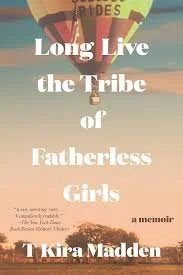
A book lens: Long Live the Tribe of Fatherless Girls by T Kira Madden
August 18, 2026
🎯 The Grief With No Name
Some kinds of loss come with a script. People know what to say. There are cards for it. But there's a quieter kind of loss that doesn't get a script at all: growing up with a parent who was physically present and still, somehow, not there.
T Kira Madden's memoir, Long Live the Tribe of Fatherless Girls, sits inside exactly that ache. Madden's father was in the house. He just called her "son," disappeared into addiction for days at a time, and left her to raise herself inside a childhood of private-school privilege and profound neglect (Madden, 2019). She wasn't a fatherless girl in the way the word usually means. She was fatherless in the way that's harder to name, and harder for other people to believe.
“How do you grieve someone who’s still alive? Who’s sitting right there at dinner?”
If that question lands somewhere for you, this book — and the psychology underneath it — is worth sitting with.
🧠 What the Science Shows
What Madden describes has a clinical name: ambiguous loss — grief for someone who is physically present but psychologically or emotionally absent, most often seen in families affected by addiction, dementia, or mental illness (Boss, 1999). Ambiguous loss is uniquely hard to process because there's no funeral, no clear ending, and often no social recognition that a loss has even occurred.
Without a clear "before and after," people carrying ambiguous loss often report chronic, low-grade grief that friends and even therapists can miss, because the parent is still, technically, right there (Boss, 1999).
In response, many people — especially queer and marginalized young people who've experienced rejection or instability at home — build what researchers call chosen family: durable, family-like bonds with friends that provide the safety, loyalty, and belonging that family of origin couldn't (Weston, 1991). These bonds aren't a workaround or a lesser version of family. Research on LGBTQ adults shows chosen family relationships genuinely function as family — providing real caregiving, support, and a sense of home (Muraco, 2006).
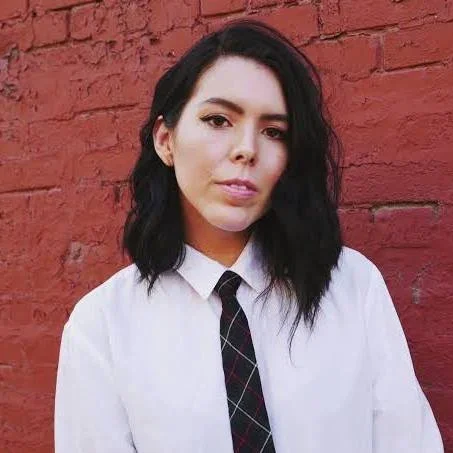
T Kira Madden
🧭 ACT Lens: Holding Love and Harm at the Same Time
Madden's memoir refuses a clean story. She loves her parents. She's also honest about how much their addiction cost her. Both are true, without either one canceling the other out — and that's precisely the kind of both/and that Acceptance and Commitment Therapy asks us to make room for (Hayes, Strosahl, & Wilson, 2012).
A lot of people carrying a childhood like this get stuck between two unworkable options: defend the parent and minimize their own pain, or condemn the parent and lose the parts of the relationship that were real. ACT offers a third option — defusion from the all-or-nothing story. You don't have to resolve whether your parent was "good" or "bad" to grieve what you needed and didn't get, and to also hold whatever love genuinely existed alongside it.
This is also where chosen family becomes more than sentiment. Building "tribe," as Madden calls it, is a form of committed action — a values-driven choice to create the belonging you didn't inherit, rather than waiting for it to be handed to you.
🔧 Skills You Can Use Today
Name the loss out loud, even without an event to point to. Try: "I'm grieving something that never had a clear ending." Naming ambiguous loss reduces the isolation of carrying grief no one else recognizes.
Practice the both/and sentence. "I love them, and I didn't get what I needed" — said as one sentence, not two competing ones — helps interrupt all-or-nothing thinking about a parent.
Take inventory of your tribe. List the people who've shown up for you like family, even if they're not related to you. Chosen family often goes unacknowledged simply because we don't have a category for it — naming it makes it more solid.
Do one small act of tribe-building this week. A call, a check-in, an honest conversation — chosen family, like any family, is built through repeated small actions, not declared once and left alone.
Notice when you're minimizing to protect someone else's image. If you catch yourself downplaying what happened so a parent "doesn't sound so bad," gently ask whose comfort that's actually protecting.
🧷 Untrendy but True
You don't need your family of origin to have failed you completely to have still gone without something real. And the people who show up for you now — chosen, not assigned — are not a substitute for a family. For a lot of us, they're the truest version of it.
Resources for the Curious
📚 Books
Long Live the Tribe of Fatherless Girls — T Kira Madden. The memoir behind this post — unflinching, lyrical, and precise about the ambiguous loss of an addicted parent.
Ambiguous Loss: Learning to Live with Unresolved Grief — Pauline Boss. The foundational text on grieving someone who's physically present but emotionally gone.
Families We Choose: Lesbians, Gays, Kinship — Kath Weston. The landmark study of chosen family among LGBTQ adults.
🎧 Podcasts
Terrible, Thanks for Asking — Honest, unpolished conversations about grief that doesn't fit a tidy narrative.
Where Should We Begin? — Esther Perel — often surfaces the both/and of loving a parent who also caused harm.
Dear Sugars — Cheryl Strayed's compassionate, values-oriented approach to complicated family relationships.
▶️ Videos
"What Is Ambiguous Loss?" — Pauline Boss, in her own words, explaining the concept that anchors this post.
References
Boss, P. (1999). Ambiguous loss: Learning to live with unresolved grief. Harvard University Press.
Hayes, S. C., Strosahl, K. D., & Wilson, K. G. (2012). Acceptance and commitment therapy: The process and practice of mindful change (2nd ed.). Guilford Press.
Madden, T. K. (2019). Long live the tribe of fatherless girls: A memoir. Bloomsbury.
Muraco, A. (2006). Intentional families: Fictive kin ties between cross-gender, different sexual orientation friends. Journal of Marriage and Family, 68(5), 1313–1325. https://doi.org/10.1111/j.1741-3737.2006.00330.x
Weston, K. (1991). Families we choose: Lesbians, gays, kinship. Columbia University Press.