Lonely Doesn't Mean Broken
What the data says about the loneliness epidemic — and why reaching out is an act of courage, not weakness
August 25, 2026
🎯 The Quiet Epidemic
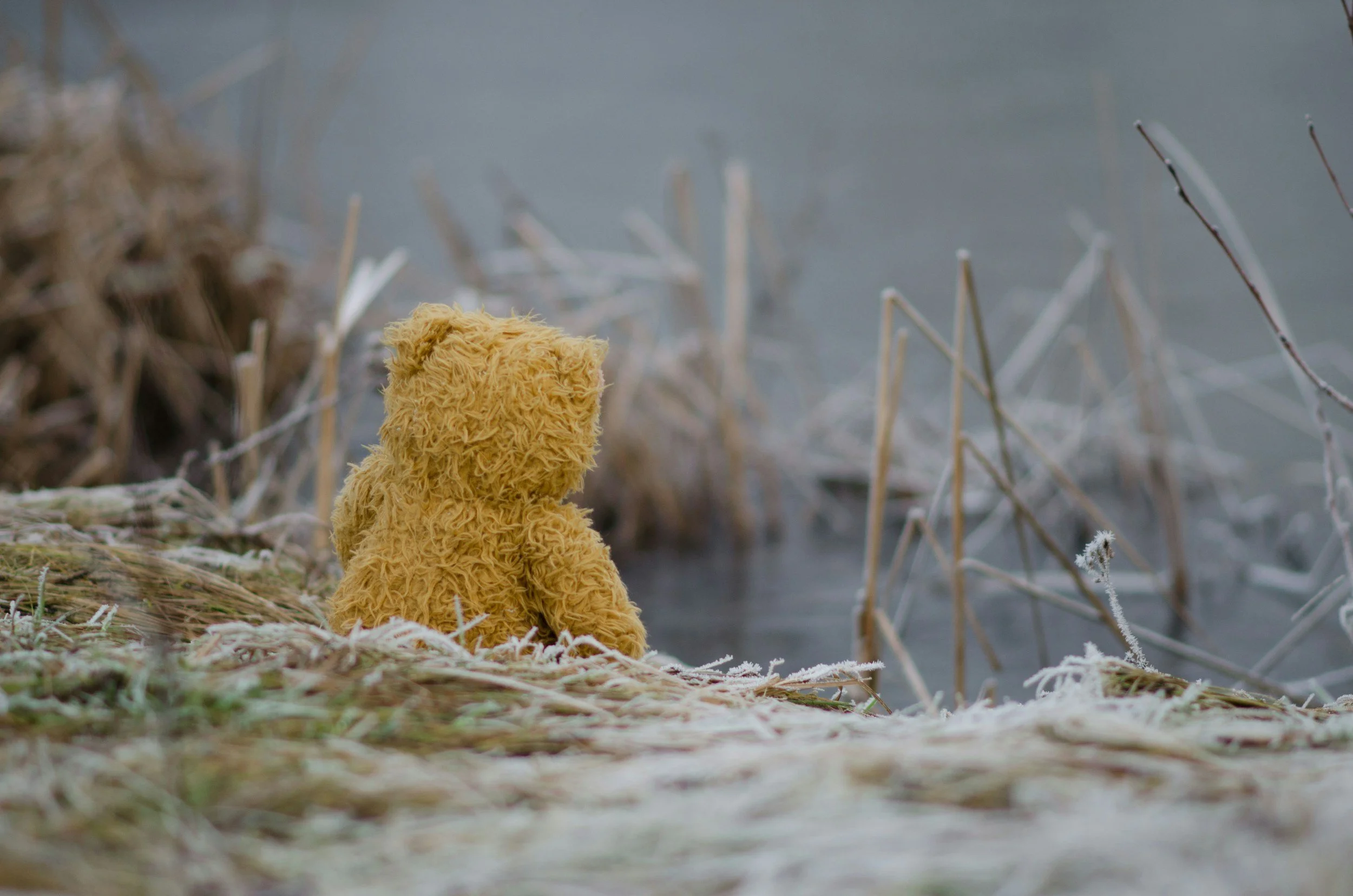
Somewhere along the way, loneliness picked up a stigma it doesn't deserve. People assume it means something's wrong with them — that they're unlikable, or too much, or somehow failing at a thing everyone else has figured out. In my practice, I hear some version of this constantly, often from people who are, by every outward measure, doing fine.
“I have people around me all day. I still feel like no one actually knows me.”
Here's the truth that tends to land like relief: loneliness isn't a personal failing. It's closer to a signal — the same kind of signal as hunger or thirst, telling you something you need is missing (U.S. Department of Health and Human Services, Office of the Surgeon General, 2023). And right now, that signal is going off for an enormous number of people at once.
🧠 What the Science Shows
About half of U.S. adults report experiencing loneliness, making it one of the most common — and most under-discussed — public health concerns in the country (U.S. Department of Health and Human Services, Office of the Surgeon General, 2023).
The health toll is not small. Chronic loneliness and social isolation are associated with roughly a 29% increased risk of premature death, an effect on mortality comparable to smoking up to 15 cigarettes a day (U.S. Department of Health and Human Services, Office of the Surgeon General, 2023).
This isn't a fringe finding. A landmark meta-analysis of over 300,000 participants found that the strength of a person's social relationships predicts survival about as reliably as many well-established medical risk factors (Holt-Lunstad, Smith, & Layton, 2010).
Loneliness also has a way of becoming self-reinforcing: the more isolated someone feels, the more they tend to withdraw further to protect against additional hurt — which, understandably, deepens the isolation instead of resolving it.
🧭 ACT Lens: Connection as Willingness, Not a Feeling You Wait For
One of the cruelest features of loneliness is that its natural instinct — pull back, protect yourself, wait until you feel more "ready" to reach out — tends to make things worse, not better. Acceptance and Commitment Therapy would name this clearly: avoidance provides short-term relief from the risk of rejection, while quietly costing you the very thing you're aching for (Hayes, Strosahl, & Wilson, 2012).
The alternative isn't to wait until you feel confident, or until the fear of being a burden goes away. It's willingness — choosing to reach out while the fear is still present, because connection matters more to you than the discomfort of risking it. You don't have to feel ready. You just have to be willing.
This also means gently questioning the thought that shows up right before you'd otherwise reach out: "They're busy," "They don't actually want to hear from me," "I'll just be interrupting." These thoughts feel like facts in the moment. Usually, they're just the mind trying to protect you from a risk that's actually worth taking.
🔧 Skills You Can Use Today
Send the message you're tempted to talk yourself out of. The text, the "thinking of you," the invitation — the ones that feel too small or too late to bother with are often exactly the ones worth sending.
Practice defusion from the "burden" thought. Try: "I'm having the thought that I'd be a burden" instead of treating it as settled fact. Thoughts about being unwanted are common in loneliness and rarely reflect how the other person actually feels.
Choose quality over quantity. One honest, unhurried conversation does more for connection than a dozen surface-level interactions. If you can have coffee with one person instead of scrolling past fifty updates, take the coffee.
Build in low-stakes repetition. A standing weekly call, the same coffee shop at the same time, a recurring group — connection tends to take root in small, repeated contact more than grand, occasional gestures.
Notice your relationship with your phone. Research cited in the Surgeon General's advisory found heavy social media use is linked to higher rates of felt isolation — not because connection online doesn't count, but because it can quietly replace the in-person contact that regulates us most (U.S. Department of Health and Human Services, Office of the Surgeon General, 2023).
🧷 Untrendy but True
Feeling lonely doesn't mean you're doing life wrong. It means you're a person, wired for connection, currently missing some of it — and that is entirely fixable, one honest reach-out at a time. The fear right before you send the message is not a sign to stop. It's usually a sign you're about to do the thing that actually helps.
Resources for the Curious
📚 Books
Together: The Healing Power of Human Connection in a Sometimes Lonely World — Vivek Murthy. Written by the U.S. Surgeon General behind the loneliness advisory, grounded and hopeful.
A Liberated Mind — Steven C. Hayes. ACT's core ideas applied to fear, avoidance, and living according to what matters.
The Lonely Century — Noreena Hertz. A wider social and economic lens on why disconnection has become so widespread.
🎧 Podcasts
Where Should We Begin? — Esther Perel — frequently touches on the loneliness inside relationships that look connected from the outside.
Ten Percent Happier — Regularly features researchers and clinicians on connection, avoidance, and social anxiety.
Hidden Brain — Accessible deep dives into the psychology of belonging and disconnection.
▶️ Videos
"The Lethality of Loneliness" — TEDx — a clear, human breakdown of why connection functions as a biological need.
References
Hayes, S. C., Strosahl, K. D., & Wilson, K. G. (2012). Acceptance and commitment therapy: The process and practice of mindful change (2nd ed.). Guilford Press.
Holt-Lunstad, J., Smith, T. B., & Layton, J. B. (2010). Social relationships and mortality risk: A meta-analytic review. PLoS Medicine, 7(7), e1000316. https://doi.org/10.1371/journal.pmed.1000316
U.S. Department of Health and Human Services, Office of the Surgeon General. (2023). Our epidemic of loneliness and isolation: The U.S. Surgeon General's advisory on the healing effects of social connection and community. https://www.hhs.gov/surgeongeneral/priorities/connection/index.html