Men's health month, the depression that hides in plain sight, and the checkups worth booking

November 3, 2026
🎯 Why this matters
November is Movember, when mustaches grow for men's health. It's a playful tradition with a serious reason behind it. Many men are struggling in ways nobody, including the men themselves, recognizes as struggling.
We've been taught to picture depression as tearfulness and sadness. For many men it looks different: a shorter fuse, longer hours at work, an extra drink most nights, more time alone in the garage or on a screen. Usually it shows up as "I'm fine."
None of this is a character flaw. These are understandable ways of managing pain that nobody taught them to name. They also cost something, both to the men carrying it and to the people who love them. This post is for men, and for the partners, daughters, mothers, and friends who've watched someone they love go quiet.
🧠 What the science shows
Depression in men often wears a different outfit. When researchers counted anger, irritability, risk-taking, and substance use as symptoms alongside sadness, the gap between men's and women's depression rates narrowed considerably (Martin et al., 2013). Many men aren't less depressed. We just haven't been looking for the right signs.
The stakes are real. Men die by suicide at nearly four times the rate of women (Centers for Disease Control and Prevention [CDC], 2026). That gap has held steady for over a decade.
"Handle it yourself" has a cost. Men who hold most tightly to norms like self-reliance and emotional control tend to have poorer mental health and are less likely to seek help (Wong et al., 2017).
Help-seeking depends on how help is offered. Men are more likely to reach out when it feels normal, practical, and doesn't threaten their sense of competence (Addis & Mahalik, 2003). Wording matters. "Tune-up" can land where "therapy" doesn't.
🧭 The ACT lens
In Acceptance and Commitment Therapy, we talk about the costs of trying to control or avoid what we feel. Many men have been raised on that strategy, which tends to work in the short term. Push the feeling down, power through, don't burden anyone. It often gets you through the shift, the deployment, or the hard year.
The trouble is that avoidance doesn't stop at the painful feelings. Turning down the sadness also turns down the joy, the closeness, and the ability to be present with your kids at dinner. Over time "fine" stops being protection and becomes a wall.
ACT offers a different kind of strength called willingness: letting a hard feeling be there without letting it steer. That doesn't mean falling apart or sharing everything with everyone. It means being honest with yourself about what's happening, so your choices come from your values rather than from avoidance.
So ask yourself: What kind of father, partner, son, colleague, mentor, or friend do I want to be ten years from now? Then ask whether "I'm fine" is getting you there.
🗺️ Tiny experiments for this week
Upgrade one "fine." When someone asks how you are, try one more specific word: tired, stretched, restless, off. Precision isn't weakness. It's information.
Notice your tells. Is it irritability, overworking, scrolling, or drinking? Name your personal signal that something's off underneath.
Try a shoulder-to-shoulder check-in. Many men talk more easily side by side than face to face, on a drive, a walk, or a project. Ask one friend a real question while doing something together.
Book the appointment. Use the checklist below. Scheduling a physical is a values-based action, and it's often the easiest way into a mental health conversation too.
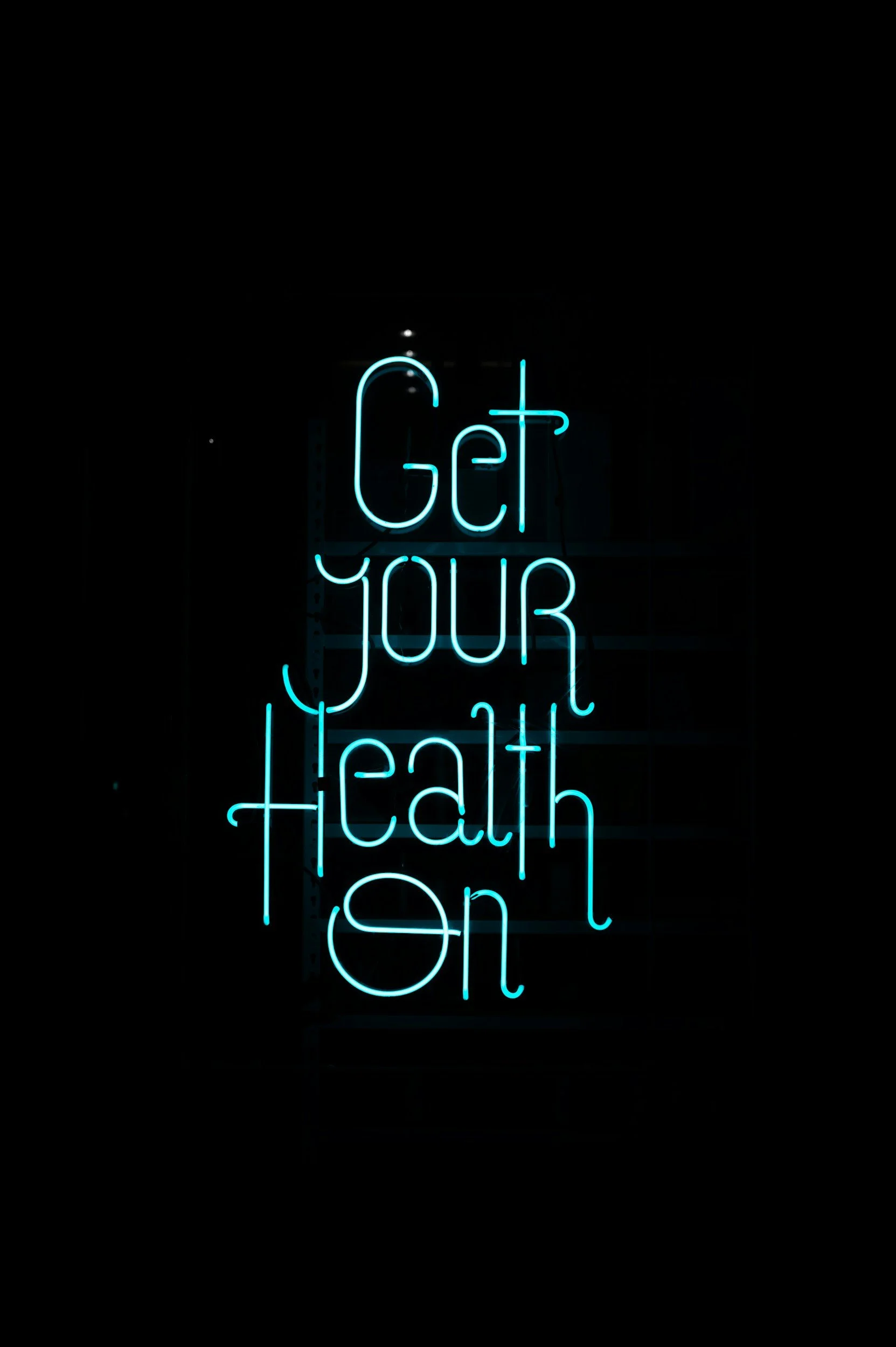
Proactive care
what to check and when
These are general guidelines for adults at average risk, mostly from the U.S. Preventive Services Task Force. Family history, race, smoking history, and other personal factors can change the timeline, so bring this list to your doctor and decide together. It applies to anyone with a prostate or testes.
Every adult
Blood pressure: starting at 18. High blood pressure often has no symptoms.
Depression and anxiety: ask to be screened. Mention irritability, sleep, and drinking, not only sadness.
Alcohol use: an honest conversation, without judgment.
Hepatitis C: once, between 18 and 79.
HIV: at least once, between 15 and 65, and more often if you're at higher risk.
Age 35–40 and up
Cholesterol and heart-disease risk: talk about statins between 40 and 75.
Blood sugar: screening for prediabetes and diabetes from 35 to 70 if you're overweight, or earlier with other risk factors.
Age 45 and up
Colorectal cancer: start at 45 and continue to 75. Colonoscopy isn't the only option, since there are at-home stool tests too.
Age 50 and up
Lung cancer: an annual low-dose CT from 50 to 80 if you have a significant smoking history (20 pack-years) and smoke now or quit within the last 15 years.
Prostate cancer: from 55 to 69, have a shared decision conversation with your doctor about a PSA blood test. The benefits are real but modest, and so are the risks of overdiagnosis. Black men and men with a family history are at higher risk, so start that conversation earlier, often in your 40s.
Age 65–75
Abdominal aortic aneurysm: a one-time ultrasound if you've ever smoked.
Know your normal
Routine testicular exams aren't recommended for men without symptoms. Do know what's normal for your body, though, and report any new lump, swelling, or heaviness promptly. The same goes for a new or changing mole.
🧷 Untrendy but true
Getting checked isn't the opposite of strength. It's what strength looks like when it plans to stick around.
If you or someone you love is in crisis, call or text 988. Veterans can press 1.
Resources for the Curious
📚 Books
I Don't Want to Talk About It, Terrence Real. The classic on "covert" depression in men and how it gets passed between generations.
The Will to Change: Men, Masculinity, and Love, Bell Hooks. A compassionate argument that men are harmed by the emotional rules they inherit, too.
Of Boys and Men, Richard V. Reeves. A data-grounded look at why many boys and men are struggling, and what might help.
🎧 Podcasts
Ten Percent Happier: Dan Harris began meditating after an on-air panic attack, and the show makes mental-health practices practical and unpretentious.
Speaking of Psychology (American Psychological Association): research-based episodes, including several on men, masculinity, and help-seeking.
Hidden Brain: Shankar Vedantam's accessible stories about the unseen patterns that shape behavior, emotion, and connection.
▶️ Videos
"A Call to Men", Tony Porter (TEDWomen). A moving talk on the "man box" and what it costs boys and men to live inside it.
Movember: men's health resources. Practical guides on mental health, prostate, and testicular health. This is a site rather than a video.
References
Addis, M. E., & Mahalik, J. R. (2003). Men, masculinity, and the contexts of help seeking. American Psychologist, 58(1), 5–14. https://doi.org/10.1037/0003-066X.58.1.5
Centers for Disease Control and Prevention. (2026). Suicide data and statistics. https://www.cdc.gov/suicide/data/index.html
Hayes, S. C., Strosahl, K. D., & Wilson, K. G. (2012). Acceptance and commitment therapy: The process and practice of mindful change (2nd ed.). Guilford Press.
Martin, L. A., Neighbors, H. W., & Griffith, D. M. (2013). The experience of symptoms of depression in men vs women: Analysis of the National Comorbidity Survey Replication. JAMA Psychiatry, 70(10), 1100–1106. https://doi.org/10.1001/jamapsychiatry.2013.1985
US Preventive Services Task Force. (2018). Screening for prostate cancer: US Preventive Services Task Force recommendation statement. JAMA, 319(18), 1901–1913. https://doi.org/10.1001/jama.2018.3710
US Preventive Services Task Force. (2021). Screening for colorectal cancer: US Preventive Services Task Force recommendation statement. JAMA, 325(19), 1965–1977. https://doi.org/10.1001/jama.2021.6238
Wong, Y. J., Ho, M.-H. R., Wang, S.-Y., & Miller, I. S. K. (2017). Meta-analyses of the relationship between conformity to masculine norms and mental health-related outcomes. Journal of Counseling Psychology, 64(1), 80–93. https://doi.org/10.1037/cou0000176
Image brief
Thumbnail: man walking a trail alone in autumn light, father and child side by side on a dock, or two friends working on a car together. Search Unsplash for "man walking autumn" or "friends side by side."
Mid-post image (before 🩺): a calm, everyday clinic moment, such as a blood pressure cuff or a man chatting with a doctor. Avoid sterile hospital stock.
Pull-quote placement: after the opening section, use: "Getting checked isn't the opposite of strength. It's what strength looks like when it plans to stick around."