The Appointment You Keep Postponing
Mammograms, fear, and a health system that's still learning women's bodies
October 6, 2026
🎯 Reframe / Why this matters
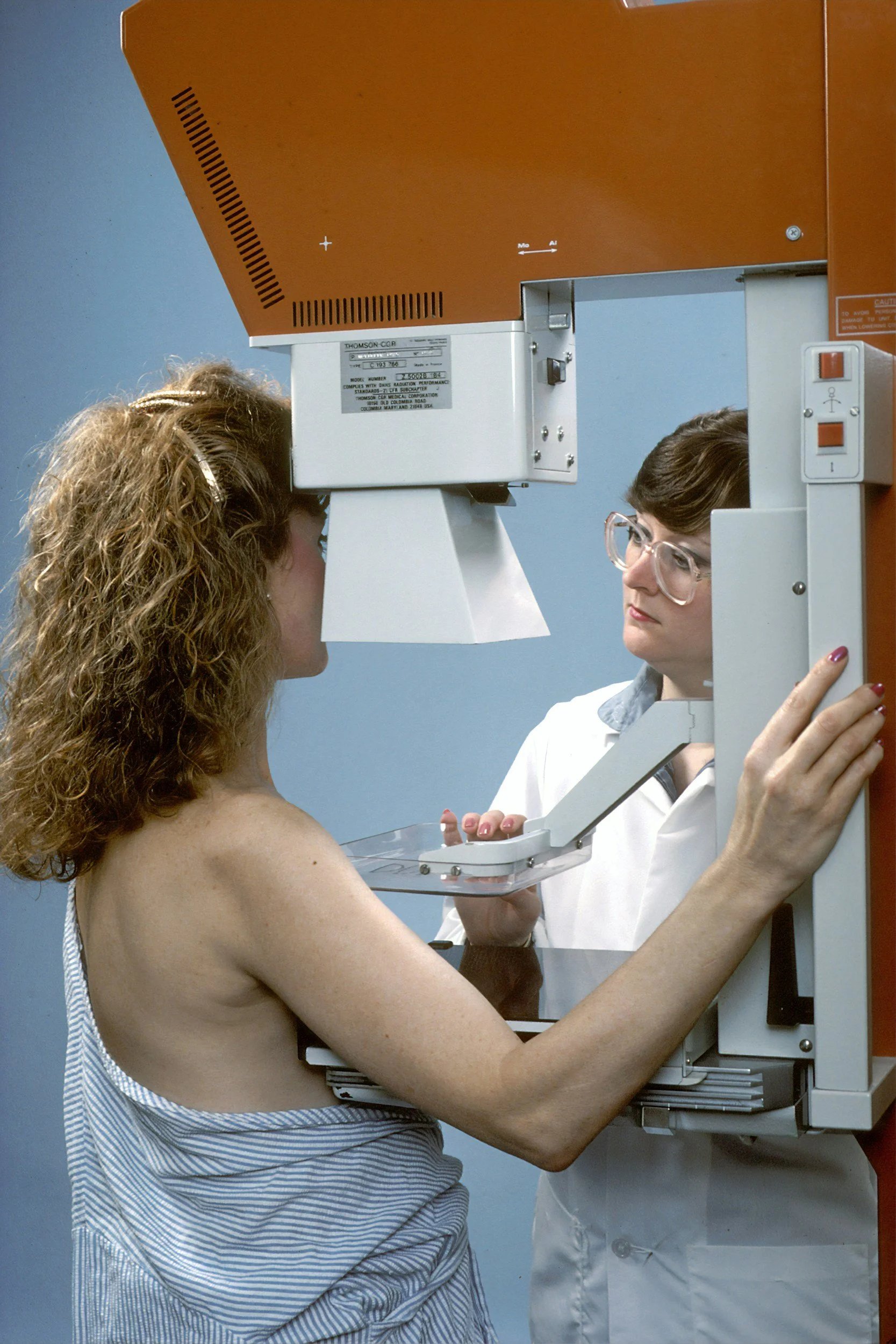
Many of us carry around an appointment we keep meaning to make. It sits on the to-do list and moves from week to week. For a lot of women, that appointment is a mammogram.
We usually call this procrastination, but it's often something more human. The appointment brings up fear: fear of the machine, of the callback, of waiting, of the word itself. It can also bring up something quieter and older: the sense that women's bodies have been an afterthought in medicine. Many of us have been told our pain was stress, that our symptoms were hormonal, or that we were overreacting. Given that history, it makes sense that walking into a clinic can feel like bracing for impact.
This Breast Cancer Awareness Month, I want to offer a different frame. Keeping that appointment isn't about being brave or fearless. It's about bringing your fear along while you take care of the person you'll be in ten years.
🧠 What the science shows
The guidance changed, and it matters. In 2024, the U.S. Preventive Services Task Force began recommending mammograms every other year for women ages 40 to 74 at average risk. Before that, routine screening started at 50. The change was driven by rising breast cancer rates among women in their 40s and by new data showing an even greater benefit for Black women, who are about 40% more likely to die of breast cancer than White women (US Preventive Services Task Force, 2024).
False alarms are common, and your nervous system notices. About half of women screened every year for a decade will get at least one "we need more images" callback that turns out to be nothing (Hubbard et al., 2011). Those callbacks can leave lingering worry even after the all-clear (Brewer et al., 2007). Knowing this ahead of time doesn't make you paranoid. It makes you prepared.
Medicine was built on a narrower body than yours. Until 1993, federally funded research wasn't required to include women. Even animal research has long relied mostly on male subjects (Beery & Zucker, 2011). A study of nearly seven million people found that women were diagnosed later than men across hundreds of diseases (Westergaard et al., 2019). Mental health care shows the same gap: the first oral medication designed specifically for postpartum depression wasn't approved until 2023.
This isn't about blame. It's about context. If you've felt dismissed, the problem may be the system, not you.
🧭 ACT lens
In Acceptance and Commitment Therapy, we talk about experiential avoidance, meaning the ways we move away from uncomfortable thoughts and feelings. Avoidance is very good at protecting us in the short term. Not booking the mammogram brings immediate relief, and relief is a powerful reward. The cost comes quietly, later.
ACT doesn't ask you to get rid of the fear first. It asks a different question: what matters enough to carry this fear toward? Maybe it's being there for your kids' milestones, growing old with the people you love, or refusing to accept a health system that overlooks women's bodies and choosing to show up for yours anyway.
Fear can stay in the passenger seat. It just doesn't get to drive.
🗺️ Tiny experiments for this week
Book it while you're anxious. Don't wait to feel ready. Anxiety tends to shrink after the appointment is made, not before.
Write a one-line "why." For example: "I'm going because I want to be here for ___." Keep it in your phone for the waiting room.
Name the callback in advance. Tell yourself: "If they call me back, that's common, and it's not a diagnosis." Preparing your mind lowers the shock.
Know your risk, not just your age. Ask your provider for a risk assessment, especially if you have a family history of breast or ovarian cancer, known genetic mutations, or dense breasts.
Bring a buddy. Ask someone to text you afterward, sit in the waiting room with you, or get coffee once it's done. Care is easier with company.
🩺 Medically supported recommendations at a glance
This is general information, not individual medical advice. Talk with your own provider(s) about your situation.
Average risk, ages 40–74: a screening mammogram every two years (USPSTF). The American Cancer Society allows annual screening starting at 40 and recommends annual screening from 45 to 54. Some radiology groups recommend annual screening from 40. It's worth deciding with your provider which schedule fits you.
Higher risk: if you have a known genetic mutation such as BRCA1 or BRCA2, a strong family history, or chest radiation before age 30, screening may start earlier and include breast MRI. Ask for a formal risk assessment, ideally by age 30.
Dense breasts: since September 2024, U.S. mammography facilities must tell you if you have dense breast tissue. If you do, ask whether supplemental imaging makes sense for you. Click on the link to learn more about breast tissue density.
Notice changes between screenings: a new lump, skin dimpling, nipple changes, or persistent breast pain deserves a call to your provider. You don't have to wait for your next scheduled mammogram.
Cost: under the Affordable Care Act, most insurance plans cover screening mammograms with no copay. Follow-up diagnostic imaging may have costs, so check your plan. If you're uninsured or underinsured, low-cost screening programs exist in every state.
Trans and nonbinary folks: the USPSTF guidance applies to anyone assigned female at birth. Transgender women on estrogen should ask their providers about screening, too.
🧷 Untrendy but True
You don't need to feel brave to do a brave thing. Scheduling the appointment is enough.
🩺 Screening and support
American Cancer Society (cancer.org): screening guidance and a 24/7 helpline.
CDC's National Breast and Cervical Cancer Early Detection Program: free or low-cost screening locator.
FORCE (facingourrisk.org): support for people with hereditary cancer risk.
DenseBreast-info.org: plain-language density education.
Resources for the Curious
📚 Books
Unwell Women by Elinor Cleghorn: a vivid history of how medicine has misunderstood women's bodies.
Doing Harm by Maya Dusenbery: a clear, well-researched look at why women's symptoms get dismissed.
The Cancer Journals by Audre Lorde: a Black lesbian poet's fierce, tender account of her breast cancer experience. It remains essential reading.
🎧 Podcasts
Breastcancer.org Podcast: expert conversations about screening, treatment, and survivorship.
Cancer Straight Talk from MSK: Memorial Sloan Kettering clinicians explain cancer topics in plain language.
NPR's Life Kit: search its health episodes for practical, bite-size guidance on screenings and advocating for yourself.
References
Beery, A. K., & Zucker, I. (2011). Sex bias in neuroscience and biomedical research. Neuroscience & Biobehavioral Reviews, 35(3), 565–572. https://doi.org/10.1016/j.neubiorev.2010.07.002
Brewer, N. T., Salz, T., & Lillie, S. E. (2007). Systematic review: The long-term effects of false-positive mammograms. Annals of Internal Medicine, 146(7), 502–510. https://doi.org/10.7326/0003-4819-146-7-200704030-00006
Hubbard, R. A., Kerlikowske, K., Flowers, C. I., Yankaskas, B. C., Zhu, W., & Miglioretti, D. L. (2011). Cumulative probability of false-positive recall or biopsy recommendation after 10 years of screening mammography: A cohort study. Annals of Internal Medicine, 155(8), 481–492. https://doi.org/10.7326/0003-4819-155-8-201110180-00004
US Preventive Services Task Force. (2024). Screening for breast cancer: US Preventive Services Task Force recommendation statement. JAMA, 331(22), 1918–1930. https://doi.org/10.1001/jama.2024.5534
Westergaard, D., Moseley, P., Sørup, F. K. H., Baldi, P., & Brunak, S. (2019). Population-wide analysis of differences in disease progression patterns in men and women. Nature Communications, 10, Article 666. https://doi.org/10.1038/s41467-019-08475-9